Dog Swimming in Mammoth Lakes: Lakes Where Dogs Can Swim
Horseshoe Lake, Twin Lakes and Convict Lake are where Mammoth Lakes dogs can swim. Here is the leash rule, the CO2 caution and how to plan a swim day.
On this page
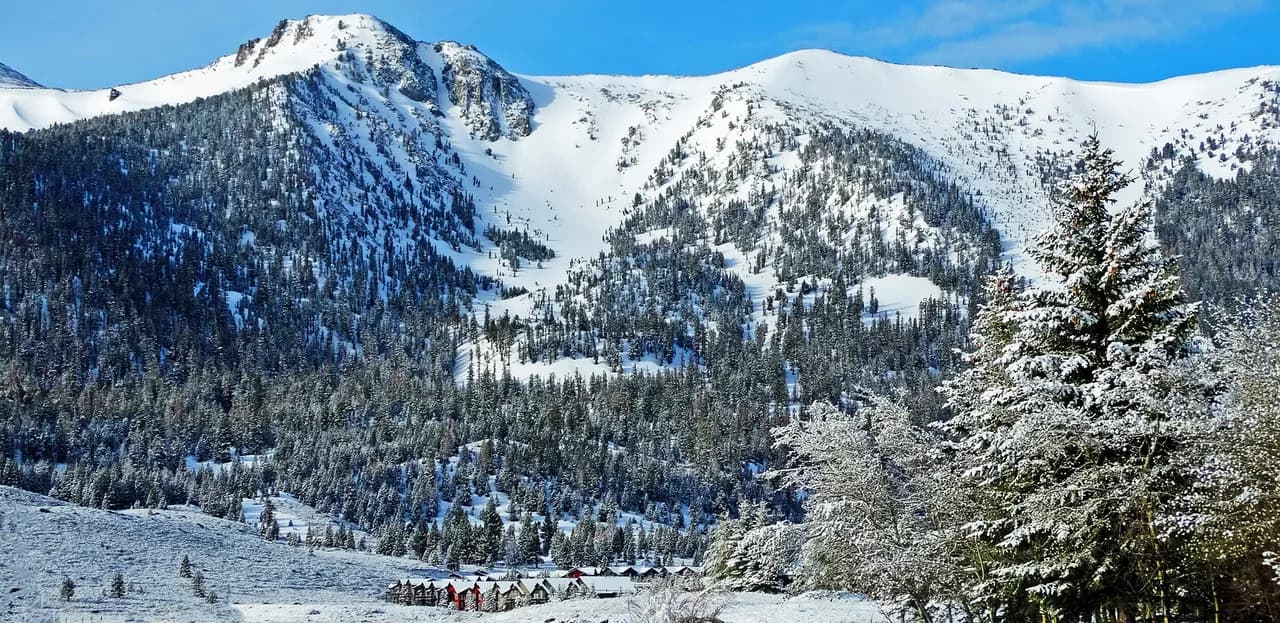
Mammoth Lakes sits high in the Eastern Sierra, where a chain of alpine lakes is linked by short paved paths and drive-up pullouts. That layout is what makes a swim day with a dog realistic here: you can park close to the water, walk a short shoreline, and move to the next lake without a long approach. The water is cold snowmelt, the air is thin, and afternoon weather can turn, so the good days are built rather than improvised.
This guide sorts the lakes by what they actually offer a swimming dog, then covers the rules that apply across the Inyo National Forest, the Reds Meadow shuttle requirement, and where to eat and sleep afterward. For the wider trip, see the full dog friendly mammoth lakes guide, which covers trails, town logistics and seasonal timing.
Why Mammoth Lakes Works for a Dog Swim Day
The Lakes Basin packs several named lakes into a short drive southwest of town: Twin Lakes, Lake Mary, Lake Mamie, Lake George and Horseshoe Lake. Most have shoreline access within a few minutes of a parking area, so a dog that tolerates cold water can get in and out quickly. The trade-off is that this is high country, roughly 8,000 to 9,000 feet depending on the lake, and a dog visiting from sea level will feel the altitude before it feels the cold.
Visit Mammoth frames the swimming option plainly: Horseshoe Lake has a wide sandy beach where you can throw a stick or ball for your dog in brisk water. That combination of beach, parking and short walk is why Horseshoe is the default swim stop rather than a shoreline stroll. Twin Lakes and Convict Lake work better as leashed walks with a possible dip, not as a dedicated fetch session.
Plan the swim for late morning rather than late afternoon. Water is coldest early, dogs dry slowly in mountain air, and summer thunderstorms tend to build after midday. A short first session also lets you see how your dog handles the altitude and the temperature before you commit to a longer one.
The Rule That Applies at Every Lake
Inyo National Forest land surrounds these lakes, and dogs are allowed on almost all forest trails except bighorn sheep habitat areas, where they are restricted to protect the sheep. Visitors' accounts describe leashes required on trails in the national forest. Treat a leashed dog as the default at every lake and read the sign at each trailhead, since the specific posting varies by location and season.
In winter the same forest land allows dogs on trails but keeps them off groomed cross-country ski tracks, and Visit Mammoth asks that dogs be restrained near those tracks. That matters for shoulder-season trips when a swim day and a snow walk can happen in the same week. Carry a fixed-length leash rather than a long line so you can shorten it quickly on a busy beach or a narrow path.
Horseshoe Lake: The Sandy Swim Beach
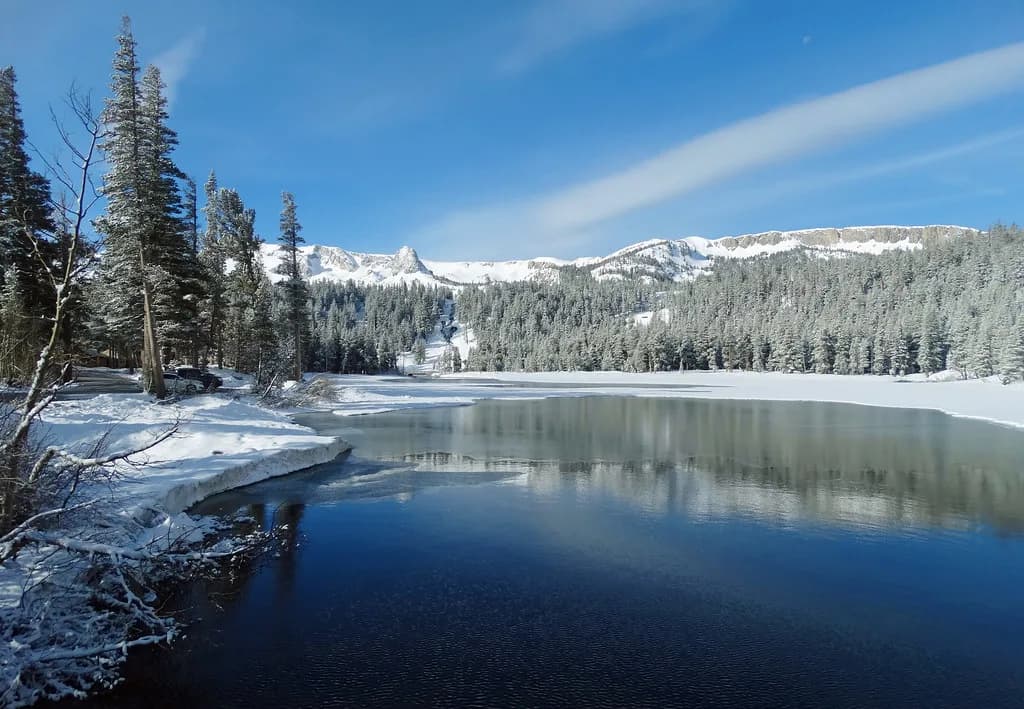
Horseshoe Lake is the one spot sources describe as an actual swim beach for dogs: wide sand, easy entry, and enough room to throw a toy without crowding another group. It sits in the Lakes Basin off Lake Mary Road, close to the Twin Lakes junction, so it fits naturally into a loop drive. Arrive early in summer, because the beach and the nearby pullouts fill as the morning goes on.
The caution at Horseshoe is geological, not about water quality. The lake sits in an area of tree-kill, where naturally occurring carbon dioxide can collect close to the ground, and Visit Mammoth advises against letting dogs dig below the surface and keeps dogs and small pets out of the tree-kill area and the adjacent roped-off zone entirely. Keep fetch on the open sand and away from roped sections, and call your dog back before it starts digging.
Bring a towel and a way to rinse sand off paws before the drive back. A collapsible bowl and a bottle of fresh water matter more here than at lower elevations, because dry mountain air dehydrates a dog quickly after a swim.
Twin Lakes: Bridge, Vista Point and Leashed Lakeside Walking
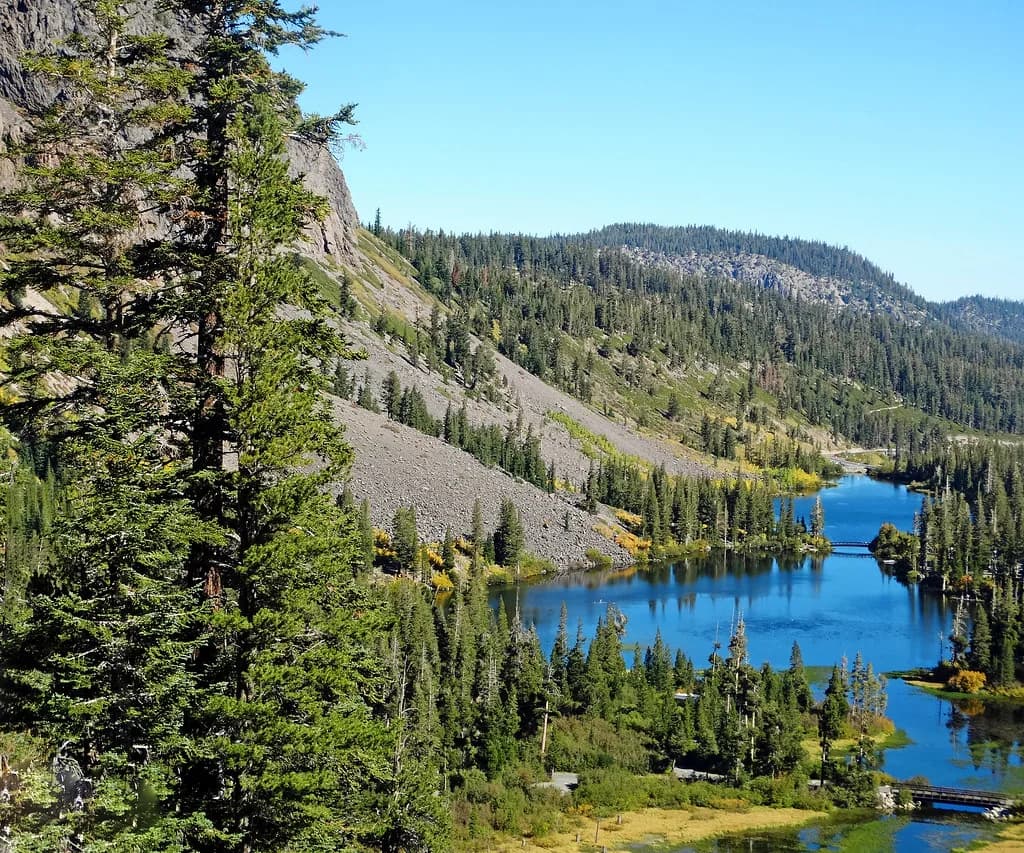
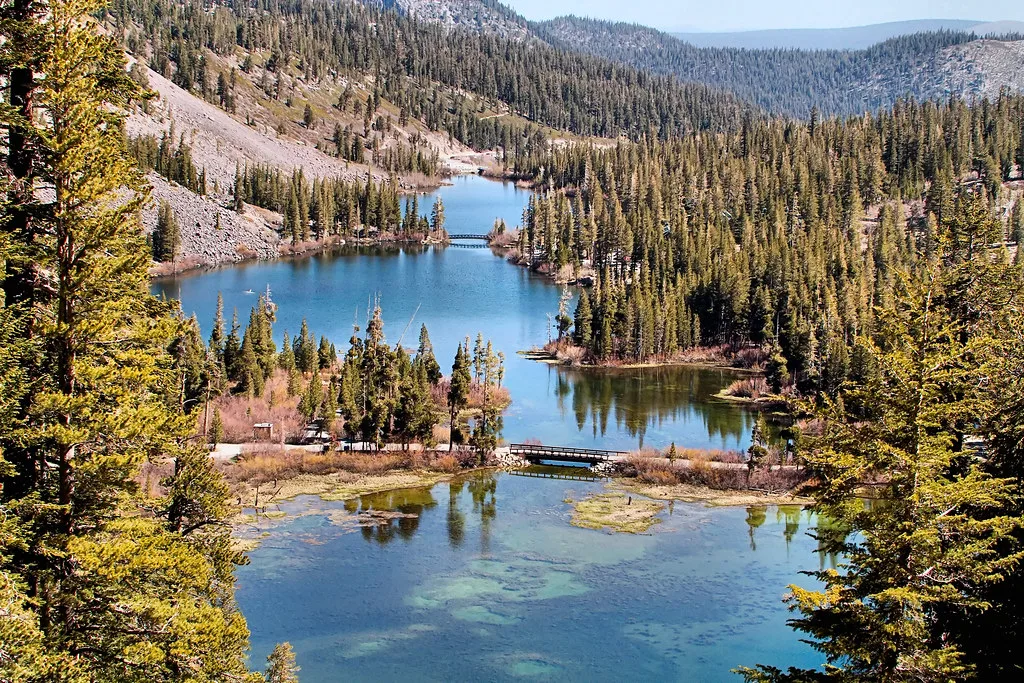
Twin Lakes sits at the start of the Lakes Basin road, with a bridge and a vista point that make it the most photographed stop in the chain. A visitor account describes seeing a dog in a life jacket riding a paddleboat on Twin Lakes, which confirms boats are part of the scene, not that dogs are officially welcomed aboard. If you want your dog on the water rather than in it, ask the rental operator about its policy and about life jackets in your dog's size before you pay.
Use Twin Lakes as a leashed walk rather than a swim plan: cross the bridge, take in the vista, and let your dog cool off at the edge under supervision. The shoreline is busier and rockier than Horseshoe's sand, so a dog that likes a clean entry will do better at the beach.
Lake Mary, Lake Mamie and Lake George: Shoreline Walks
Lake Mary, Lake Mamie and Lake George are drive-up lakes along the same road, and the Lakes Basin path links several of them for walking. These are better treated as leashed shoreline strolls than swim stops, because the access is a path and a bank rather than a beach. They work well as a leg-stretch between Horseshoe and the drive back to town.
If your dog is a confident swimmer and the bank is clear, a supervised dip is reasonable, but watch for submerged rocks and sudden drop-offs close to shore. Keep the session short and dry the dog off before the next stop, since a wet dog in a car at altitude chills fast even on a sunny day.
Convict Lake: The Loop Trail and Turquoise Water
Convict Lake is about 10 miles south of Mammoth Village off US-395, a box canyon lake with Mount Morrison above it and a trail around the shoreline. A visitor account describes a dog-friendly loop with good viewpoints and notes that parking around the lake is restricted late at night, with no overnight parking. Go for the walk and the views, and treat the water as a cool-off rather than a swim destination.
Sunset is the draw here, but a late finish means driving back in the dark on a mountain road, so a leashed walk earlier in the day is the easier call with a dog. Carry water for the loop, since the trail is exposed in stretches and the elevation makes even a flat walk feel longer.
Reds Meadow Valley: Devils Postpile, Rainbow Falls and the Shuttle
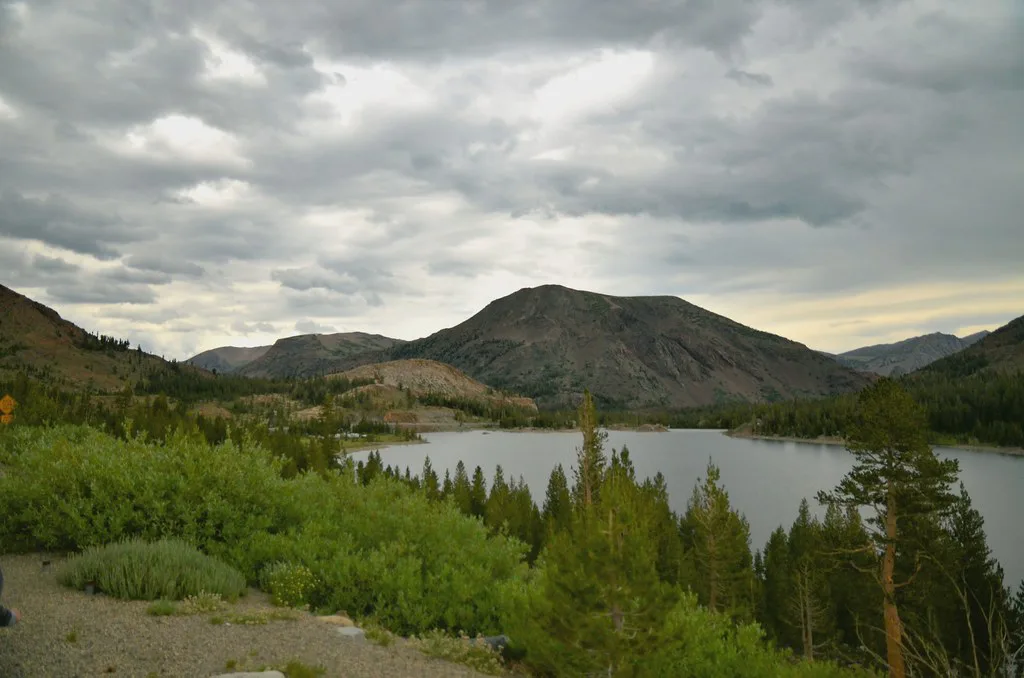
Dogs on leash are allowed at Devils Postpile National Monument and on the surrounding trails, including the walk to Rainbow Falls, per a visitor account. The shuttle bus into Reds Meadow Valley also takes dogs, but with a leash and muzzle required, as Visit Mammoth states. Pack a muzzle that fits before you arrive; improvising one at the bus stop is not realistic.
The Rainbow Falls walk is long and mostly exposed, so a swim day and a falls day are different outings for most dogs. A visitor account puts the round trip at roughly 5 miles from the Devils Postpile lot and notes little shade, which argues for an early start and a swim stop afterward rather than before. Access to the valley depends on the Reds Meadow Road season and on whether the shuttle is running, so check the current status with the monument or the forest before you build a day around it.
Rivers and Creeks vs. Lakes
Creeks fed by snowmelt run fast and shallow through the Mammoth area, and a dog that wades in can be pushed off balance by a current that looks mild. Lakes are the easier swim: still water, visible entry points, and a beach where you can stand. Save the creeks for a paw-cooling stop on a hike rather than a fetch session.
Paws on High-Altitude Ground
Visit Mammoth advises starting with short outings so you and your dog acclimatize to altitude and terrain, and notes that dogs feel altitude effects too. Build the swim in on your second day rather than your first, and keep the first session short. A dog that is panting hard after a few retrieves at 8,000 feet is telling you something a sea-level dog would not.
Pack for cold water and strong sun in the same bag: a towel, fresh water and a bowl, a leash you can shorten, waste bags, a muzzle for the Reds Meadow shuttle, and paw protection for hot pavement and rough granite. The same source warns against leaving pets in parked cars even briefly and asks owners to pick up after their dogs, which matters at a busy beach. Mammoth Mountain's guide adds booties or paw balm for snow and ice in winter, useful if your trip straddles seasons.
Water Quality and Algae: Check Before You Swim
Algae blooms and water-quality advisories change through the season, and no source here reports current conditions for any Mammoth lake. Before you let your dog in, check the current advisory with Inyo National Forest or the land manager for that lake, and read any posted notice at the trailhead or beach. If a bloom is visible, keep the dog out and pick a different stop.
The CO2 caution at Horseshoe is separate from algae and does not change with the season in the same way. Keep dogs out of the tree-kill area and roped zones regardless of how clear the water looks, and let the open sand be the swim zone.
Where to Eat After the Swim
Mammoth Mountain publishes a list of pet-friendly patios that includes Mammoth Brewing Company, Distant Brewing and Shelter Distilling among the breweries, plus restaurants such as John's Pizza Works, Roberto's Cafe, The Warming Hut and the Yodler Restaurant & Bar. Seasonal spots like The Stove and The Chip Shot Cafe appear as summer-only. Patio policies can shift by season and staffing, so confirm seating with a dog when you arrive.
Several of these sit along Main Street and in the Village, which makes a post-swim meal easy to fold into the drive back. For a fuller list organized by neighborhood and patio type, see the guide to dog friendly restaurants mammoth lakes. A wet dog on a patio is a courtesy question: bring a towel and keep the leash short.
Where to Stay
Mammoth Mountain lists three in-town dog-friendly lodgings: Mammoth Mountain Inn with ski-in, ski-out access, The Westin Monache Resort steps from the Village Gondola, and Tamarack Lodge cabins in the Lakes Basin. Mammoth Mountain's own guide notes pet fees vary by property and directs guests to the front desk when booking, so ask about the fee, weight limit and dog count when you reserve.
For a swim-focused trip, Tamarack's cabins put you closest to the Lakes Basin water and the shortest drive to Horseshoe. The Westin and Mammoth Mountain Inn trade that proximity for walkable dining and Village access. Compare published pet terms side by side in the dog friendly hotels mammoth lakes guide.
Seasonal Timing
A visitor account recommends late September into early October for cooler weather, fewer crowds and still-warm patio seating, while noting that snowfall can arrive as early as mid-October and that mountain passes and Reds Meadow Road close seasonally. For swimming, that shoulder window is a gamble on water temperature. Midsummer is the reliable swim season but brings crowds at Horseshoe and afternoon storm risk.
Whatever the month, check road and pass status before you commit to a route, and confirm that the Reds Meadow access you want is open. If your dog swims in shoulder season, shorten the session and dry the dog thoroughly before the drive.
Quick Decision Guide
Strong swimmer, warm day, early start: Horseshoe Lake for a sandy entry and a real fetch session, kept off the tree-kill zone. Older dog or a short stop: Twin Lakes for a leashed bridge walk and a supervised paw-cool, or one of the Lake Mary shoreline paths. Scenery-first day: Convict Lake's loop trail, with the water as a cool-off rather than the main event.
If your dog wants more walking than swimming, the dog friendly hikes mammoth lakes guide pairs these lakes with trails that suit different energy levels. Add a stop at one of the dog parks in mammoth lakes if your dog needs off-leash time that a leashed shoreline cannot provide.
Plan Your Swim Day
Build the day around one real swim stop and one short walk, not a checklist of every lake. Horseshoe for the beach, Twin Lakes or the Lake Mary shoreline for a leashed stroll, and a published patio in town for the meal afterward. Keep the leash on, watch for roped areas, and check current water advisories and road status the morning you go.
If you are still choosing between mountain destinations, the same planning logic applies at places to swim with dogs south lake tahoe, where cold alpine water and posted rules also shape the day. If you want a lower-elevation comparison instead, see these places to swim with dogs sacramento, where rivers and pool rentals replace snowmelt lakes.
Frequently Asked Questions
Can dogs swim in Horseshoe Lake in Mammoth Lakes?
Yes. Horseshoe Lake has a wide sandy beach where dogs can swim and fetch, and it is the clearest swim option in the Lakes Basin. Keep your dog out of the tree-kill area and any roped-off zone, where naturally occurring carbon dioxide can collect close to the ground, and stop digging below the sand surface.
Which Mammoth Lakes allow dogs in the water?
Horseshoe Lake is the spot described as a swim beach. Twin Lakes and Convict Lake work for leashed shoreline walks with a supervised cool-off, and the Lake Mary, Mamie and George shorelines are better for walks than swimming. Read posted signs at each lake, since access is managed by the forest.
Do dogs have to be on a leash at Mammoth Lakes?
Inyo National Forest trails allow dogs but restrict them in bighorn sheep habitat areas, and leashed handling is the safe default on trails and shorelines. Rules are posted at each trailhead and can vary by location and season, so check the sign where you park.
Can dogs ride the Reds Meadow shuttle to Devils Postpile?
Yes, dogs are allowed on the shuttle into Reds Meadow Valley, but a leash and muzzle are required. Bring a muzzle that fits before you arrive. Shuttle operation and road access change seasonally, so confirm the current status before planning a day around it.
Is the water too cold for dogs in Mammoth Lakes?
These are snowmelt lakes, so the water is brisk even in midsummer. Keep sessions short, dry your dog afterward, and watch for shivering or sluggish behavior. Build in acclimatization time, since altitude affects dogs as well as people.
Where can I eat with my dog after swimming in Mammoth Lakes?
Mammoth Mountain's dog-friendly list includes Mammoth Brewing Company, Distant Brewing, Shelter Distilling, John's Pizza Works, Roberto's Cafe and The Warming Hut, with some spots summer-only. Policies shift by season, so confirm dog seating on arrival, and bring a towel for a wet dog.
Sources
Notes for your next trip with your dog
Optional updates when we add cities and guides.
You might also like
Continue reading
More guides you'll find useful