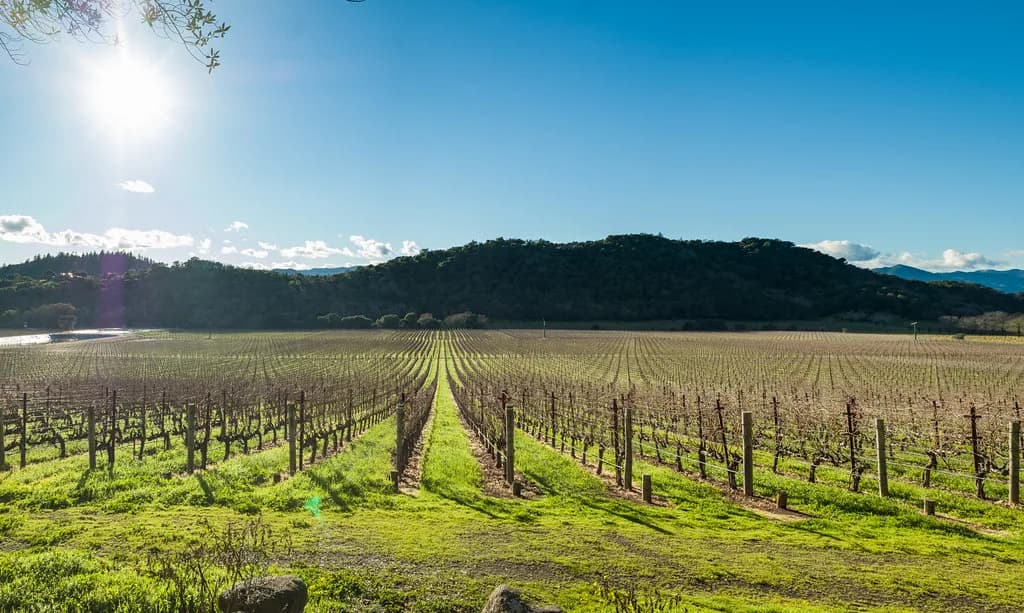
Dog-Friendly Wineries Napa: Which Are Worth Visiting
Plan a Napa winery day with your dog: which wineries publish pet-friendly outdoor policies, how tastings are booked, and what to pack for valley heat.
On this page
Napa Valley rewards planning more than almost any wine region in the country: most tastings are seated, timed and booked ahead, so a dog-friendly day here is really a scheduling exercise. The question is rarely whether the valley tolerates dogs and much more often whether the specific property you want has outdoor seating where a leash is welcome. Get that match right and the day runs smoothly.
This guide names the properties that publish pet-friendly grounds, explains what outdoor seating means in practice, and shows how to shift the day earlier when the pavement heats up. It also separates pet policies from ADA service-animal access, because the two work differently and mixing them up leads to awkward conversations at the host stand.
What 'Dog-Friendly' Actually Means at a Napa Winery
At a Napa winery, dog-friendly usually describes a garden, lawn or terrace rather than a tasting room, and properties set their own terms for each. Pine Ridge Vineyards in Napa publishes that it welcomes pets and points guests to its garden and winery grounds, which is the pattern to look for: a defined outdoor space with a posted welcome rather than a blanket yes.
Because seating is the variable, the useful question when you book is not whether the winery likes dogs but where you will sit and whether that seat is outdoors. A property can welcome pets on the lawn and still keep its indoor library tasting dog-free, and both things are true at once. Ask which experience you are reserving and whether it is outside.
Service animals fall under the ADA and are not pets, so their access follows different rules than a pet policy. Keep those two lanes separate when you read a winery's website or speak with staff, and describe your dog accurately as a pet when you reserve. Properties decide pet access themselves; ADA access is a legal matter.
How to Map a Dog-Friendly Napa Day
Napa's tasting rooms cluster along Highway 29 through Yountville, Oakville, Rutherford and St. Helena, with the Silverado Trail running parallel to the east and quieter roads heading into the outlying valleys. Distances look short on a map, but valley traffic and seated tastings make two or three stops a realistic day, not five. Build the route so the longest drive comes first and the last stop is nearest your lodging.
Book one anchor tasting, then choose a second stop that sits within a short drive of it, and leave the third slot open for a walk or a nap in the shade. Overbooking is the most common mistake with a dog in the car: a 90-minute seated tasting plus a 20-minute drive between properties eats a morning fast. Two confirmed outdoor reservations beat four hopeful walk-ins.
If your dog needs real exercise rather than a leash walk between vines, treat the winery as one half of a park-and-vineyard day. A morning at a local park or trail, an early afternoon tasting, and a quiet evening at your lodging is a better rhythm than squeezing a dog walk between pours.
Pine Ridge Vineyards: Caves, Gardens and a Pet-Friendly Grounds Policy
Pine Ridge Vineyards sits in Napa and pairs cave tours with a garden setting, and its published guest information confirms that pets are welcome on the winery grounds. The combination works well for a dog day because the tour gives the humans a structured activity while the outdoor space gives the dog somewhere to settle afterward.
Cave tours involve a group, a set departure and enclosed spaces, so plan for the dog to wait outside with one adult while the rest of the party tours, or split the group. Ask about the current tour format, and whether dogs may join any part of it, when you book, since cave conditions and group logistics vary. Treat the garden welcome as the certain part and the tour as the open question.
Reservation Logistics: Book a Slot, Skip the Walk-In
Napa has moved decisively toward reserved, seated tastings, and many properties simply do not hold space for drop-ins on busy weekends. Reserve online or by phone, name your party size accurately, and mention that you are traveling with a dog so the host can assign an outdoor table. Group size caps and advance-payment terms are set property by property, so read the confirmation email for the specific terms.
Midday is the hardest window for a dog: the sun is high, patios lose their shade, and asphalt and stone paths hold heat. A 10 a.m. or 3:30 p.m. seating is gentler, and a late-morning slot lets you finish before the valley warms up. If your only option is noon, request a shaded table and plan a shorter stop.
Harvest and crush season in late summer and early fall brings equipment, extra traffic and more activity around the properties, which can unsettle a dog accustomed to quiet. If you visit during that window, keep the dog close in parking areas and choose grounds seating over a spot near a crush pad.
Hotel pet fees, weight limits and dog counts vary widely across the valley, so settle your lodging before you lock tastings.
Patio, Lawn or Vineyard Block: Reading the Seating
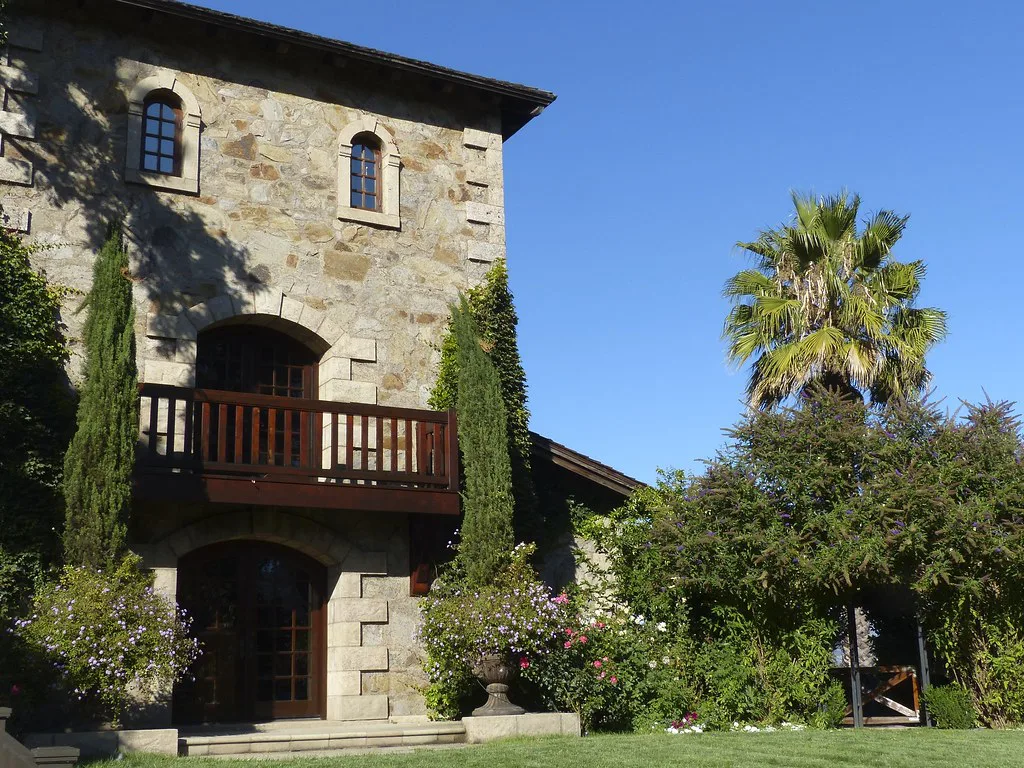
Outdoor seating at Napa wineries ranges from a paved terrace with umbrellas to a lawn with picnic tables to a gravel area among the vines, and each has different consequences for a dog. Pavement and gravel get hot and abrasive; grass is cooler but may be treated or irrigated. When you arrive, look for a table with a solid patch of shade and an edge where you can tuck the leash.
Water is not guaranteed at every outdoor table, so carry a bottle and a collapsible bowl and offer a drink before the humans order. Shade moves through an afternoon, so a table that is comfortable at 11 a.m. may be fully sunlit by 1 p.m. A clip-on shade or a seat under a pergola is worth requesting at booking.
Keep the leash on and keep your dog at your seat rather than letting it wander the rows, which protects vines, other guests and your own tasting. A short leash and a mat give the dog a defined spot, and most patios are compact enough that a settled dog goes unnoticed.
If you want a full meal with the dog rather than crackers and a cheese plate, restaurants around downtown Napa handle pets on their own published terms.
What to Bring and What to Leave Behind
Pack for a car-based day: water and a bowl, waste bags, a towel or mat, a light blanket for shade or chilly mornings, and a current rabies tag on the collar. Bring a second leash in case one gets wet or lost, and keep the dog's ID tag readable. Leave behind retractable leads, which are awkward on a patio, and anything that squeaks.
Food is the other variable. Most wineries sell small plates rather than full meals, and dogs should not sample the charcuterie, so pack a small snack for your dog and keep your own food on the table. Do not assume water bowls are provided, and do not assume they are not; carry your own and top up when you can.
Vaccination and licensing rules for dogs in Napa County are set locally rather than by wineries, so check the county animal services page if you are traveling from out of state and want current tag requirements. For most visitors, a collar tag and a leash satisfy what a winery will actually ask about.
Heat, Harvest and the Shape of the Day
Napa summers run hot and dry, and the valley floor can be significantly warmer than the coast an hour away, so a dog used to fog and 65 degrees will struggle on a 95-degree afternoon. Plan the outdoor tasting for the cooler end of the day and use the hot middle hours for a drive, a shaded lunch or a rest at your lodging.
Pavement is the detail owners underestimate. Asphalt parking lots and stone paths absorb heat and can be uncomfortable within seconds, so test with the back of your hand before you walk the dog across a lot, and carry the dog across hot stretches if it is small enough.
Smoke season can settle into the valley in late summer and early fall, and air quality affects dogs as much as people. On hazy days, shorten the outdoor stop, keep the car windows up with recirculated air, and move the tasting earlier rather than pushing through a long afternoon outside.
Service Animals, Pets and Where Wineries Draw the Line
Federal ADA rules give service animals access to places of public accommodation, and that access is not the same as a pet policy. A winery that permits pets on its lawn is making a discretionary choice; a winery that admits a service dog indoors is following the law. Do not use one to argue for the other, and describe your dog honestly when you book.
If you travel with a service animal, confirm the specific experience you are booking and let staff know in advance so seating can be arranged, since cave tours and small-group tastings have physical constraints. For pets, the operative information is simply whether the property publishes a pet-friendly space and whether your reservation is for it.
Some Napa properties allow pets, some restrict them to the grounds, and some do not permit them at all, so check the individual winery page rather than relying on a general list. Lists age quickly as tasting programs and staffing change.
If Napa Is Booked Out or Your Dog Needs Room to Run
Peak weekends can leave even flexible travelers without an outdoor slot, and that is a signal to restructure rather than to keep calling. Swap the second tasting for a hike or a long park visit and keep a single confirmed winery stop as the anchor, which also solves the problem of a dog that has had enough by noon.
Another option is to widen the map. Wine regions within driving distance of Napa have their own tasting cultures and their own pet policies, and some are looser about walk-ins and outdoor seating, as with the dog friendly wineries santa barbara counts among its tasting rooms.
Wherever you end up, use the winery tour as the structured part of the day and the trail or park as the unstructured part, and keep the two in that order if your dog is young or high-energy.
Matching Wineries to Your Dog's Energy and Age
A senior dog who sleeps through a two-hour lunch will do better at a single long seated tasting than at three quick stops with car rides in between. A young, busy dog needs the walk first and the patio second, ideally with a chew or a frozen treat to occupy it while you taste. Match the shape of the day to the dog, not to the map.
Reactive dogs can still do Napa if you choose grounds seating with space around the table and ask for a corner when you book. Avoid tasting rooms where tables are packed tightly and patios where guests walk past constantly, and keep an eye on the parking area as you come and go.
Puppies under a year and dogs still in training are better suited to a short visit than a full itinerary, so plan one stop and a park, and build up to longer days.
Plan Your Visit
Start with the property that publishes a pet-friendly space, reserve an outdoor table at a cooler hour, and keep the itinerary to two confirmed stops with room for a walk. Bring water, a bowl, waste bags and a mat, and test the pavement before you cross a parking lot.
Use the fuller city guide for lodging, parks and meal planning, and treat each winery page as the authority on its own rules.
Frequently Asked Questions
Which Napa wineries are dog friendly?
Pine Ridge Vineyards in Napa publishes that it welcomes pets and points guests to its garden and winery grounds. Other properties set their own pet policies, and those policies change as tasting programs change, so check the individual winery website or your booking confirmation for the specific experience you are reserving.
Can you bring a dog to a Napa winery tasting?
Often yes, but usually only to outdoor seating such as a garden, lawn or terrace, and usually only with an advance reservation. Indoor tasting rooms, libraries and cave tours are commonly restricted. When you book, ask which experience you are reserving and whether it is outdoors before you assume your dog can join.
Are Napa wineries dog friendly indoors or only outside?
Pet access is typically limited to outdoor areas. Indoor spaces are frequently reserved for guests without pets, and some tours run through enclosed cave areas where a dog cannot follow. Assume outdoor-only until a property's own materials say otherwise.
Do you need a reservation to taste wine in Napa with a dog?
Reservations are the norm across Napa Valley, and seated tastings in particular are booked in advance. Booking also lets the host assign an outdoor table and confirm the pet policy for your slot. Drop-in visits are unreliable on busy weekends and riskier when you are traveling with a dog.
What should I bring when visiting Napa wineries with my dog?
Carry water and a collapsible bowl, waste bags, a towel or mat, a light blanket for shade, and a short leash with a current ID and rabies tag on the collar. Leave the retractable lead at home. Small plates are common at wineries, so bring a snack for your dog rather than relying on the food menu.
Is Napa too hot for dogs in the summer?
Summer afternoons can be very hot on the valley floor, and pavement and stone paths get hotter than the air. Book an early or late seating, use the middle of the day for a drive or a shaded rest, and test surfaces with the back of your hand before walking your dog across them.
Sources
Notes for your next trip with your dog
Optional updates when we add cities and guides.
You might also like
Continue reading
More guides you'll find useful