Bill Archer Dog Park Houston: Plan Your Visit
Plan a visit to Bill Archer Dog Park in northwest Houston with details on the 17-acre off-leash layout, the small-dog section, shade, water and day-trip logistics.
On this page
Bill Archer Dog Park is the northwest Houston off-leash option that keeps showing up on local lists for one reason: scale. Roughly 17 fenced acres open up for dogs, with a separate small-dog section carved out so tiny breeds are not sharing a gate with the fastest dogs in the county. If you are building a dog friendly Houston day around your dog, this is a destination stop rather than a quick neighborhood loop.
The park sits at 3201 State Highway 6 North, which puts it on the far northwest side of the metro rather than inside the Loop. That location shapes the trip: you drive, you park, you commit an hour or more, and you plan the rest of the day around a car that will smell like wet dog on the way home.
Where Bill Archer Dog Park Is and How Big It Is
The address is 3201 State Highway 6 North, and the enclosure totals about 17 acres. Within that footprint, the large-dog side covers roughly 14 acres and the small-dog side about 3 acres. That split matters more than the headline number: a 3-acre small-dog run is unusually generous, so owners of little dogs are not squeezed into a postage-stamp corner while the big field gets all the room.
Because the park is a Harris County facility on Highway 6, treat it as part of a northwest Houston outing rather than a downtown detour. From the Energy Corridor or Katy you are looking at a short highway hop; from downtown or the Heights, budget real driving time each way. Build the day so the dog park is the anchor and errands fill the rest.
One planning note: the park publishes no dedicated official page among the sources behind this guide, so hours, closures and any seasonal maintenance are things to confirm through Harris County before you load the car. A quick call or a check of the county parks site saves a wasted drive across the metro.
Getting There, Parking and Loading the Car
The Highway 6 setting means parking is a lot-and-walk affair, with a short approach from the car to the double gates. Bring a leash that stays on until you are inside the entry pen, because the transition zone between the lot and the enclosure is where loose dogs surprise people. A six-foot leash is more useful here than a retractable lead.
Before you leave home, put a full water bottle, a collapsible bowl, a towel and a spare leash in the car. The towel is not optional in Houston: the park has dog showers and a wash-down area, and a rinse before the ride home keeps pond water and dust out of your upholstery. A cheap rubber mat in the cargo area does the rest.
If you are pairing the park with eating out, sort the restaurant side of the day before you go, since patios fill up on weekends and not every one seats dogs. Our guide to dog friendly restaurants houston flags which patios publish a pet policy, so line up a backup option before a full patio strands you with a wet, tired dog in the car.
Large-Dog Field vs. Small-Dog Area: Choosing the Right Gate
Start with the small-dog side if your dog is under the park's stated threshold for that enclosure and is uneasy around bigger dogs. The 3-acre small-dog run gives a greyhound-adjacent terrier room to sprint without a Great Dane in the mix, and it is easier to keep an eye on your dog in a smaller space when you arrive at a busy time.
The 14-acre large-dog field is the draw if you have a high-energy dog that needs real distance. The trade-off is visibility: in tall grass or behind a rise, your dog can get out of sight fast, so walk the perimeter first to see where the terrain folds and where other owners cluster. Recall training matters more here than in a neighborhood park.
Whichever side you pick, watch the gate for a minute before entering. If a knot of dogs is pressing the entrance, wait outside the double gate until the group breaks up, then walk in calmly and release your dog away from the crowd. That single habit prevents most scuffles at busy parks.
Shade, Water and Showers on a Hot Houston Day
Shade trees are scattered through the park, and the shelters and benches give owners somewhere to sit while the dog cools off. On a humid afternoon, though, trees alone are not enough for a dark-coated or flat-faced dog. Plan short play bursts, then a water break in the shade, rather than one long run in the sun.
The wash-down station at the entrance is the park's most practical feature in this climate. Use it before you get back in the car, and bring your own towel because the station does not supply one. A dog that has been through a pond will still be damp, so a second towel for the seats earns its space in the trunk.
Carry your own water even though the park has water features and fountains. Shared bowls and standing water are where a lot of dogs pick up stomach trouble, so a bottle and a personal bowl keep your dog drinking without the communal setup. Refill before you head out rather than relying on the last fountain near the gate.
Surface, Footing and What Rain Does to the Ground
Expect a mix of turf, packed dirt and gravel paths rather than a uniform lawn. That variety is good for paws in dry weather, but after a Houston downpour the low spots hold water and the turf turns slick. If it rained hard the night before, wear shoes you do not mind ruining and plan to rinse the dog before the drive home.
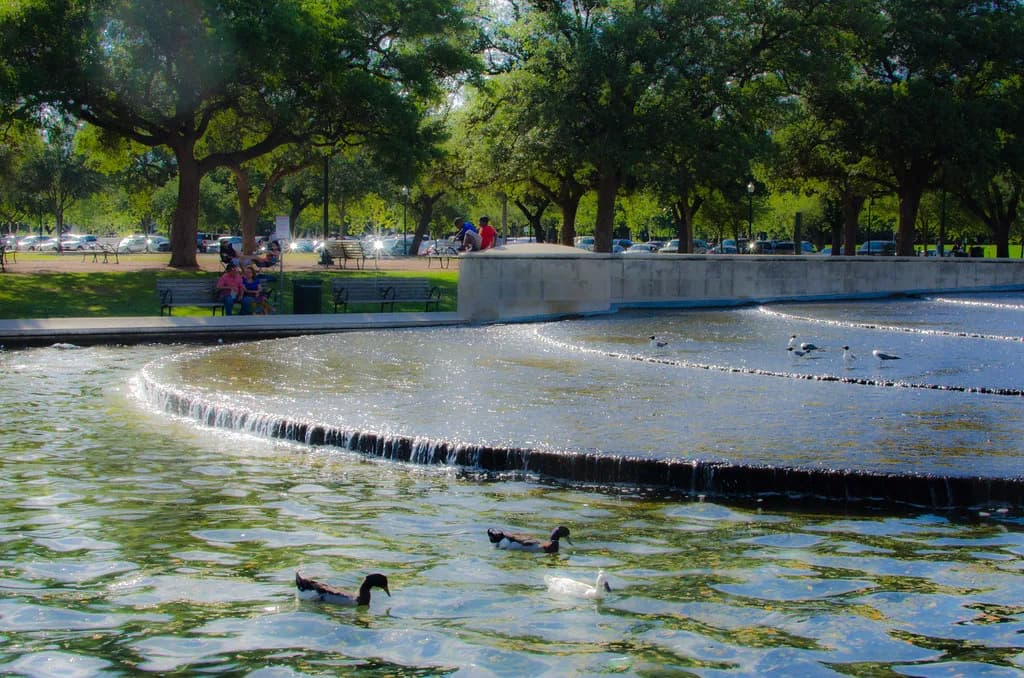
The park includes a pool-style water feature that dogs treat as a swimming hole, which is the main reason a towel belongs in the car. Standing water warms up fast in summer, so check it before your dog plunges in after a long run. A dog that is already overheated should cool down in shade with water first.
Footing on the small-dog side is generally easier on tiny paws, but gravel near the gates can bother a dog with sensitive pads. If your dog has had paw issues, a short warm-up walk on the path before you enter the field lets you see how the ground feels. Keep nails trimmed and check pads after a visit.
Rules and Etiquette at the Gate
Leash on until you are inside the entry enclosure, leash on again before you leave it. Vaccination tags and current rabies proof are standard expectations at Texas dog parks, so keep tags on the collar and carry records in the car if your dog's paperwork lives in a folder at home. If your dog is unwell or in heat, skip the visit.
Pick up after your dog every time, and carry more bags than you think you need. Waste stations exist, but they run empty on busy weekends and the park is large enough that a bag in your pocket beats a walk back to the gate. Off-leash freedom at this scale only survives if owners handle the cleanup.
Read the room before you commit. If a group of dogs is bunched at one end and an owner is visibly struggling, use the other side of the field and keep moving. ADA service-animal access works differently from pet-park rules, so a handler relying on a service dog follows the federal access standard rather than the posted pet etiquette.
Best Times to Visit
Early morning is the best slot from late spring through early fall in Houston. The ground is cooler, the shade is longer, and the crowd is smaller, which makes the first visit with a new dog far easier to manage. Midday in July and August is a poor trade: hot turf, wilted owners and dogs that overheat quickly.
Weekend afternoons draw the biggest crowds, and that is when the gate area and the small-dog side get congested. If you can only visit on a Saturday, aim for opening time or late in the day when the sun drops. Weekday mornings are the quietest window for a nervous or reactive dog.
The park's published hours are not listed in the sources behind this guide, so do not assume it stays open after dark. Check Harris County's current information before an evening trip, especially in winter when sunset comes early. A five-minute check beats arriving to a locked gate.
How Bill Archer Compares With Other Houston Dog Parks
Millie Bush Bark Park in George Bush Park is the closest rival for scale, with 13 double-gated acres, large and small dog areas, swimming ponds and showers, and it is open dawn to dusk seven days a week. Choose Millie Bush if you are based in west Houston near Highway 6 and Westheimer; choose Bill Archer if you are farther north and want the bigger small-dog run.
Inside the city, TC Jester Park runs about 31,000 square feet for large dogs and 16,000 for small dogs, with benches and drinking fountains in both sections. It is a better fit for a quick after-work run than a full outing. Maxey Park on Maxey Road offers 12 to 13 acres with separate areas, a dog shower and waste stations.
North of the city, Cattail Park in The Woodlands is about an acre split into large and small sections, with a water source but no guarantee of bowls, so bring your own container. It suits a suburban walk-and-play stop rather than a destination trip.
If you want the fuller menu of fenced runs, shaded loops and neighborhood parks before you commit to a drive, compare dog parks in houston side by side. Each has a different trade-off between drive time, acreage and shade, and the right pick depends on your dog's energy and your schedule.
What to Pack for a Bill Archer Visit
Pack for a wet dog and a hot car. That means two towels, a water bottle and bowl, waste bags, a spare leash, and shoes with tread for muddy turf. A jug of rinse water in the trunk handles the worst of the pond smell when the showers are busy.
For hot days, add a cooling mat or a damp bandana and plan a shaded rest every fifteen minutes or so. Puppies, seniors and flat-faced breeds should keep visits short and stay on the small-dog side when they qualify. A dog that is panting hard is done for the day, no matter how much field is left.
Bring proof of vaccination and a current tag on the collar, because entry rules at public dog parks assume the basics are in order. A folder in the glovebox with vet records and a recent photo of your dog is a small habit that pays off if a collar slips.
Staying and Eating Nearby With Your Dog
A northwest Houston base shortens the drive to Highway 6, and dog friendly hotels houston vary widely on fees, weight limits and how many dogs they accept. Ask about those three specifics when you book.
For meals, patios are the realistic option, and many Houston spots seat dogs outdoors rather than inside. Check the current pet policy before you commit to a table, and keep the dog leashed and settled under it. A tired dog after a park visit usually makes a better patio companion than a fresh one.
If your trip stretches to the coast, beach days need their own prep and a check on leash rules before you go. The sand and surf are a different outing from a fenced field, so plan a separate day rather than squeezing both into one.
Plan Your Visit
Bill Archer Dog Park earns its reputation on acreage: about 17 acres, split into roughly 14 for large dogs and 3 for small ones, with shade trees and showers that make a humid Houston day manageable. Go early, bring your own water and towels, and let the size of the field set the pace rather than trying to cover all of it at once.
Check current hours and any closure notices through Harris County before you drive out, since those details change and are not published in the sources behind this guide. Build the rest of the day around a clean, dry dog and you will get more out of a northwest Houston trip.
Frequently Asked Questions
Is Bill Archer Dog Park free to enter?
The park is a Harris County facility, and the sources behind this guide list no entry fee. Parking and any permit or registration requirements are not published in those sources; check current access rules with Harris County before you go.
Does Bill Archer Dog Park have a separate small dog area?
Yes. The park's roughly 17 acres include a small-dog section of about 3 acres, separate from the large-dog field of about 14 acres. Check the posted size threshold at the gate so you enter the correct enclosure.
Are there water features at Bill Archer Dog Park?
The park has a pool-style water feature that dogs use as a swimming hole, along with fountains and dog showers near the entrance. Bring your own bowl and towel, since shared water and damp dogs are part of the experience.
What time does Bill Archer Dog Park open?
The sources behind this guide do not list official hours for Bill Archer Dog Park. Check Harris County's current park information before planning an early or evening visit, and do not assume the gates stay open after dark.
Are dogs allowed off leash at Bill Archer Dog Park?
Off-leash use is the point of the park's fenced enclosures, with dogs released inside the double gates. Keep your dog leashed from the car to the entry pen and again on the way out.
Where is Bill Archer Dog Park?
It is at 3201 State Highway 6 North in northwest Houston, a Harris County site on the far northwest side of the metro rather than inside the Loop. Plan for a drive and combine it with other northwest Houston stops.
How does Bill Archer compare with Millie Bush Bark Park?
Millie Bush Bark Park in George Bush Park covers 13 double-gated acres with large and small dog areas, ponds and showers, and is open dawn to dusk daily. Bill Archer is larger overall and has a bigger small-dog run, so pick by which side of the metro you are based on.
Sources
Notes for your next trip with your dog
Optional updates when we add cities and guides.
You might also like
Continue reading
More guides you'll find useful