
Milwaukee Leash Law: Rules, Fines and Off-Leash Dog Parks
Milwaukee's six-foot leash rule, waste fines and the county dog park pass system, explained for dog owners planning a walk, a patio stop or an off-leash run.
On this page
Milwaukee runs on two separate sets of dog rules, and knowing which one applies to the pavement under your feet is the whole game. City law keeps dogs leashed on public ground; Milwaukee County runs the designated off-leash parks and sells the pass that gets you in. Plan a walk around the first layer and an off-leash run around the second, and the trip stays simple.
This guide covers the leash length, the waste fines on city versus county land, the breed-specific rules that catch visitors off guard, the seven off-leash parks with addresses, and the hours and pass details that decide whether an early-morning run fits your schedule. It also covers the practical side: leashed lakefront routes, summer pavement, and rainy-day backups.
Why the Leash Rule Shapes a Milwaukee Dog Trip
Almost every walk you take in Milwaukee happens under the city's leash requirement, from the lakefront paths to the sidewalks outside downtown taprooms. That is not a restriction to work around so much as a planning fact: your dog stays on a six-foot line, and off-leash time happens only inside a gated county dog park. Build the day around one or two leashed walks and, if your dog needs to sprint, a dog-park stop.
The two systems have different enforcers and different paperwork. City police and humane officers handle dogs running at large on city streets, while county park staff and rules govern the off-leash areas and their passes. Treat the county pass as an add-on to your trip rather than a substitute for the city leash rule, and use the dog friendly Milwaukee planning guide to line up neighborhoods, stays and walks around it. If you want to compare how another city splits leash rules from off-leash access, the Albuquerque leash law guide covers the same two-layer decision.
The Core Rule: Six Feet, Everywhere Public
Milwaukee city law prohibits letting a dog be "at large," and compliance means a leash no longer than six feet in public places. A police officer or humane officer may impound an animal found at large, so the leash length is worth checking before you pack a long training line for the trip. Retractable leads that extend past six feet put you outside the rule on a city sidewalk.
Practically, a standard four-to-six-foot nylon or leather leash covers every situation you will meet on a Milwaukee walk, from crowded riverwalk sections to patio seating where a shorter lead keeps your dog close to the table. Bring a fixed-length lead as your primary and leave the flexi at home.
The municipal code itself is the source to read if you want the ordinance language rather than a summary. It sits in Chapter 78 of the Milwaukee city ordinances, which covers animal restraint and related rules.
Waste Fines: City Property Versus County Parks
Not picking up after your dog is expensive in Milwaukee, and the amount depends on where the miss happens. Milwaukee Police Department officers can issue fines up to $500 for pet waste left on public property, and the same citation applies on private property. Carry bags on every walk, including short ones between the hotel and a patio. Inside Milwaukee County parks, the citation amount is different: $200.50, and the same figure applies to having a dog in a prohibited area or off-leash outside a gated dog-park section. County rules also make owners responsible for bringing a means of picking up waste and carrying it out for disposal. Pack more bags than you think you need for a dog-park visit, so you are ready to carry waste out.
Breed-Specific Rules for Pit Bulls and Rottweilers
Milwaukee adds leash-holder and containment requirements for pit bulls and rottweilers that go beyond the general six-foot rule. While one of these dogs is leashed, the person holding the leash must be 16 or older, unless a younger handler carries prior written approval from the Department of Neighborhood Services. If a teenager in your group plans to walk the dog, that paperwork belongs in the trip folder.
Owners of these breeds must also keep a yard or kennel area fenced well enough to contain the dog and complete at least one behavior or training class through a trainer recommended by the Wisconsin Humane Society, the Milwaukee Dog Training Club or the Milwaukee Area Domestic Animal Control Commission. For a visitor staying in a hotel or rental, the containment clause rarely comes up, but the handler-age rule applies on any public sidewalk.
Dog Bites and Wisconsin's Strict Liability Rule
Wisconsin law makes a dog owner automatically liable for damages when their dog injures a person, domestic animal or property without provocation, which is why a reliable recall and a short leash matter more than any training gadget. A first offense can bring a forfeiture of $50 to $2,500, and repeat incidents with knowledge of a prior bite can double the damages, capped at $5,000. The practical takeaway for a trip is simple: keep the leash on and skip crowded, unpredictable spaces if your dog is reactive.
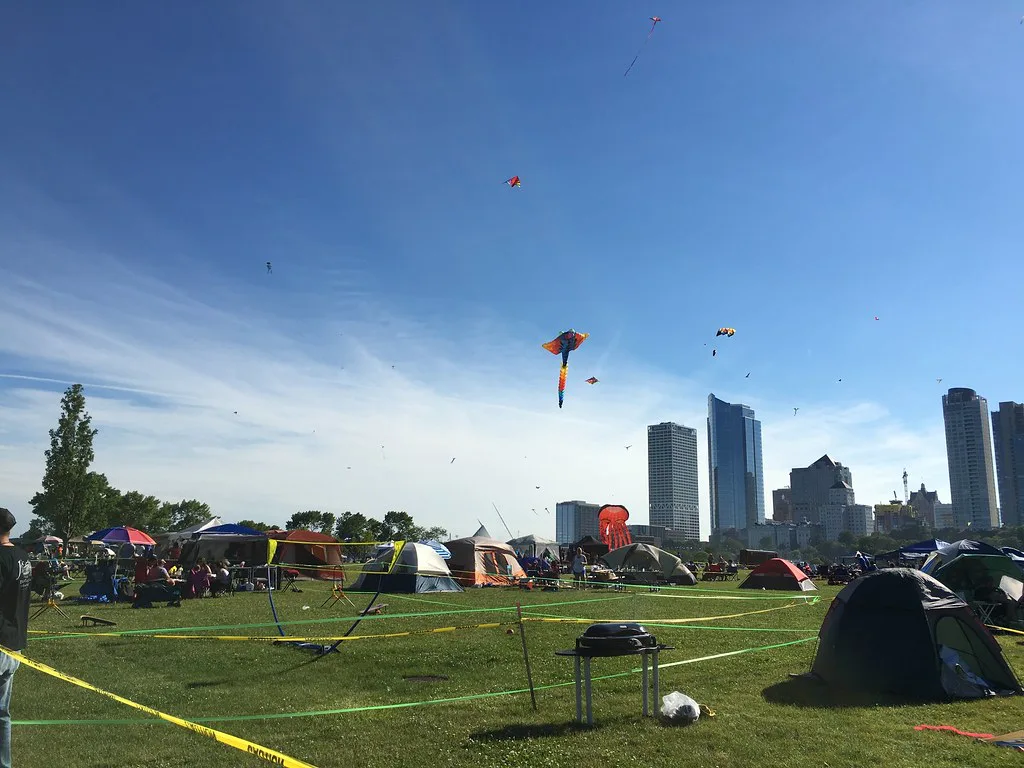
The Seven Milwaukee County Off-Leash Dog Parks
Milwaukee County designates seven off-leash dog parks, and the addresses make it easy to pick one near your side of town. Bay View Dog Park sits at East Lincoln Avenue and South Bay Street in Bay View; Currie Park Dog Park is at 3535 N. Mayfair Road in Wauwatosa; Estabrook Park Dog Park is at 4400 N. Estabrook Drive; Granville Dog Exercise Area is at 11718 W. Good Place; Roverwest Dog Park is at 3243 N. Weil St.; Warnimont Park Dog Park is at 5400 S. Lake Drive in Cudahy; and the downtown park is at 103 W. Clybourn Ave.
Neighborhood context helps you choose. Bay View and the downtown Clybourn site suit a stay near the lakefront or a downtown hotel, Currie Park puts you near Wauwatosa's commercial strip, Estabrook sits along the Milwaukee River corridor, and Warnimont pairs a dog run with a South Shore lakefront setting in Cudahy. Roverwest and Granville are the practical picks if you are staying north or west of the center. For a wider look at city parks beyond the off-leash list, the guide to dog parks in milwaukee covers what else is worth a leashed stroll.
Off-leash access is limited to the gated section of a designated park. Letting a dog run in any other park area draws the same county citation as a waste violation, so keep the leash on until you are through the gate and back out again.
Dog Park Passes: Licensing, Vaccinations and What You Pay
Before you can buy a Milwaukee County dog park pass, your dog must be licensed by your municipality and current on vaccinations. That prerequisite trips up visitors whose home city does not issue a tag or whose rabies paperwork is stored at home. Bring proof of both, and check how a license issued in your home municipality is handled before you count on a same-day pass.
Pricing runs on a calendar-year cycle, so the number you pay depends on when you arrive. An annual pass for 2026 is $35 for Milwaukee County residents and $39 for non-residents, with a senior or disability rate of $19 resident and $24 non-resident, and each additional dog at $19 resident or $24 non-resident. A single-day pass costs $6. Because rates and the validity window change from year to year, confirm the current price and pass term with Milwaukee County Parks before you buy.
For a short trip, the single-day pass is usually the better deal, and it is the one to buy if you want one off-leash session rather than a season of them. If you are traveling with two dogs, run the math on an annual pass with the additional-dog rate against two day passes before committing.
Hours: When the Gates Are Open
Milwaukee County dog parks open seven days a week, year-round, from 5 a.m. to 10 p.m., with a later 6 a.m. start at the downtown Milwaukee dog park. That difference matters for an early riser on a summer morning, when a 5 a.m. run works at Estabrook or Bay View but the Clybourn site stays closed for another hour.
Hours can shift with seasons and maintenance, so the day you travel is the day to check the current schedule. The county parks department publishes park status and any closures, and that is the listing to trust over an older travel post.
What to Pack for a Milwaukee County Dog Park
Every off-leash site here is a gated section, so a standard routine works: leash on until the gate is closed behind you, leash back on before you exit. Owners are responsible for carrying out their dog's waste, so bring your own bags and plan to hold them until you find a bin. The county rules do not promise water or shade at every park, so pack a collapsible bowl and a bottle rather than assuming a spigot will be running.
Think about footing and crowd timing. Late afternoon on a weekday is often calmer than a weekend midday, and a park with more open ground suits a dog that likes to run, while a smaller enclosure suits a dog that gets overwhelmed. If your dog has never been in a busy off-leash setting, start with a quiet hour at a less central park such as Granville or Roverwest.

Leash Etiquette on the Lakefront, Riverwalks and Patios
Milwaukee's best leashed walking runs along the lakefront and through the river corridor, and both are places where a six-foot lead keeps everyone comfortable. Keep your dog on the inside of the path when bikes pass, and shorten the leash at patio tables instead of tying it to furniture. If you plan a meal stop, the guide to dog friendly restaurants milwaukee covers which patios welcome dogs, and the rule of thumb is to confirm seating policy when you book.
City sidewalks and park paths carry the same leash requirement, so there is no stretch of an urban walk where a dog should be loose. Pick up immediately, keep the dog off planted beds, and ask before approaching another leashed dog. Those habits matter more in a compact downtown than they do on a wide-open trail.
Heat, Humidity and Pavement Timing
Milwaukee summers combine real humidity with pavement that holds heat well into the evening, so time walks for early morning or after sunset on hot days. Test asphalt with the back of your hand before a midday walk; if it is too hot to hold there for a few seconds, it is too hot for paws. Carry water on lakefront walks, where shade is patchy along open stretches.
The same logic applies at the dog park. A fenced area with limited shade is a short-visit destination in July, not an hour-long outing, and a bowl of water at the gate is worth the carry. Winter visits work fine for cold-tolerant dogs, but the ground can be icy at gates and on concrete approaches.
Rainy-Day and Cold-Weather Backups
When the weather turns, a leashed dog still needs exercise, and Milwaukee's covered and indoor options vary by season. Breed and size restrictions are common at indoor dog facilities, and day-pass policies change, so call ahead rather than arriving with a dog that does not meet a weight or vaccination requirement. A long leashed walk under an awning-lined commercial street is the simplest fallback.
Cold-weather trips need a different kit: a towel by the door, a coat for short-haired dogs, and a plan that keeps walks short and frequent rather than one long outing. Sidewalk salt is the bigger issue for paws, so rinse feet after a winter walk.
Plan Your Visit
Milwaukee rewards a simple plan: a licensed, vaccinated dog on a six-foot leash for the lakefront, the riverwalk and any patio stop, plus a county pass and a bag of waste bags for one off-leash session at a designated park. Check the current pass price, the park hours and the validity term with Milwaukee County Parks the week you travel, since those details reset on a calendar cycle.
If you are still choosing where to stay and eat, sort those decisions around the leash rule rather than against it. A hotel near the lakefront or a downtown patio puts leashed walks and an off-leash run within a short drive, and the dog friendly hotels milwaukee guide covers which properties publish pet terms you can plan around.
Frequently Asked Questions
Is it illegal to have your dog off leash in Milwaukee?
Yes, on public ground. Milwaukee city law prohibits letting a dog be at large, and compliance means a leash no longer than six feet. The exception is the gated section of a designated Milwaukee County off-leash dog park, which requires a pass and a licensed, vaccinated dog.
How long can a leash be in Milwaukee?
Six feet. A police officer or humane officer may impound an animal found at large, so a fixed-length lead of six feet or shorter is the safe choice for every city walk.
Can I be fined for not picking up dog waste in Milwaukee?
Yes. Milwaukee Police Department officers issue citations for waste left on public or private property, and Milwaukee County parks set their own citation amount for violations inside park land. Both figures are published in the Milwaukee Journal Sentinel's summary of the rules, and the current amounts are worth checking there before you travel because they can be updated.
Where can my dog be off-leash in Milwaukee County?
In seven designated county dog parks: Bay View, Currie Park in Wauwatosa, Estabrook Park, Granville Dog Exercise Area, Roverwest, Warnimont Park in Cudahy, and the downtown park on West Clybourn Avenue. Off-leash access is limited to each park's gated section.
Do I need a pass for Milwaukee County dog parks?
Yes. A pass is required, and before buying one your dog must be licensed by your municipality and current on vaccinations. Both single-day and annual passes are sold, and the annual pass runs on a calendar-year cycle, so confirm the current options with Milwaukee County Parks.
What are the hours of Milwaukee County dog parks?
They are open seven days a week, year-round, from 5 a.m. to 10 p.m., with a 6 a.m. opening at the downtown Milwaukee dog park. Confirm the current schedule with Milwaukee County Parks before an early visit.
Are there special leash rules for pit bulls in Milwaukee?
Yes. When a pit bull or rottweiler is leashed in Milwaukee, the person holding the leash must be 16 or older unless a younger handler carries prior written approval from the Department of Neighborhood Services. Owners of these breeds also face fenced-yard and training-class requirements.
Sources
Notes for your next trip with your dog
Optional updates when we add cities and guides.
You might also like



Continue reading
More guides you'll find useful