Dog Parks in San Antonio: Where to Go & Rules
Plan a dog-park day in San Antonio with the leash rules, small-dog areas and posted regulations at Phil Hardberger Park and other city parks.
On this page
San Antonio is a spread-out city built around car trips, so a dog-park outing here usually means choosing a specific fenced enclosure and driving to it rather than strolling out of a downtown hotel. The good news is that the city's best-known dog parks sit inside a large natural-area park with real shade, water and separate sides for small and large dogs. This guide covers what those parks publish and how the rules change your planning.
Treat the dog park as one piece of a dog-friendly San Antonio day rather than the whole itinerary. A morning off-leash run, a shaded on-leash walk and a patio lunch with your dog make a more balanced outing than an hour of hard play in the sun, especially from May through September.
Why San Antonio's Off-Leash Scene Is Mostly Fenced City Dog Parks
Unlike cities with vast open-space trail networks where dogs run loose, San Antonio keeps off-leash activity concentrated in designated, fenced enclosures managed by the parks department and partner conservancies. That structure is helpful for visitors: the boundaries are clear, the rules are posted, and you know exactly where the leash comes off. It also means a dog who needs long unfenced runs will be better served by a structured on-leash greenway walk than by hunting for an unofficial open field.
The practical consequence is that you should plan around one or two named parks rather than a general neighborhood. Pick the park closest to where you are staying, check its published amenities and rules the day before, and build the rest of the day's errands and meals around that anchor. If your dog is reactive or shy, a fenced park with a separate small-dog side is often a better fit than a busy all-dog enclosure.
Phil Hardberger Park: Two Fenced, Shaded Dog Parks
Phil Hardberger Park is the anchor of San Antonio dog-park planning, and the conservancy that supports it publishes clear pet guidance. Dogs are welcome on leash throughout the park and off-leash only inside the two fenced dog parks, which are shaded and split into separate areas for all dogs and small dogs. Both sides list water fountains, picnic tables, obstacle features and play shelters as amenities.
The two entrances serve different sides of the city. The NW Military Hwy Dog Park is at 8400 NW Military Hwy, San Antonio, TX 78230, and the Blanco Road Dog Park is at 13203 Blanco Road, San Antonio, TX 78216. The conservancy lists park hours as sunrise to sunset, seven days a week, so an early start or a late-afternoon visit both fit inside the gate.
Outside the dog parks, the leash rule is specific and worth internalizing before you arrive: dogs must be on a 6-foot leash at all times, and handlers must stay on the trail with the leash in hand. Because Hardberger is managed as a natural area, going off-trail risks skunks, ticks, chiggers and ground-nesting wildlife. A long line or retractable leash is not a substitute here; bring a standard six-foot lead.
Dog-Park Rules That Shape Your Visit
The conservancy publishes a set of dog-park rules that read like a pre-trip checklist. There is a limit of two dogs per adult inside the dog park at any time, all dogs must be leashed when entering and leaving, and children under 12 must be accompanied by an adult. Food and drinks are not permitted inside the enclosure, though training treats are allowed, and bicycles, skateboards, rollerblades and motorized vehicles stay out.
Vaccination and identification requirements are the rules most likely to trip up an out-of-town visitor. Dogs must have current rabies vaccination as required by the San Antonio Metropolitan Health District, be healthy and disease-free, and wear collars with current license tags. Puppies under four months of age and dogs in heat are prohibited, and any dog showing signs of aggression must be leashed and removed immediately.
The two-dog limit matters if you are traveling with a multi-dog household or meeting a friend with dogs. One adult can bring two dogs in, so a group of three dogs needs at least two adults present, and a solo traveler with three dogs cannot use the enclosure as a group. Plan that split before you arrive rather than negotiating it at the gate with leashed dogs in hand.
Small-Dog Versus All-Dog Sides: Picking the Right Side
Hardberger's dog parks give you a genuine choice, and the conservancy is direct about how to use it: take your dog to the area suitable for its size and do not bring a large dog into the small-dog side. The small-dog area is the point of the split, giving petite dogs and their owners a lower-risk space. If your dog is small but intensely playful with bigger dogs, the all-dog side is the better social fit, but only if your dog can handle the rougher dynamics.
Mid-size dogs are the gray area. A dog in the 25-to-40-pound range often fits comfortably on the small-dog side by size but may prefer the energy of the all-dog area. Watch the entrance for a few minutes before committing, and choose based on your dog's play style and confidence rather than weight alone. If the side you pick gets crowded or tense, leaving is always the right call.
Size aside, the same etiquette applies on both sides: leash your dog in and out, keep the leash with you at all times, and watch for a dog who is getting overwhelmed. A short, successful visit beats a long one that ends in a scuffle, especially on a first trip to an unfamiliar park.
Water, Shade and Surface: Planning Around the Texas Heat
Shade and water are the real constraints on a San Antonio dog-park day, and Hardberger's dog parks publish both. The enclosures are described as shaded with water fountains, and the wider park is a natural area with tree cover along the trails. That is meaningful in a city where summer afternoons push pavement and turf temperatures well above air temperature.
Treat midday summer visits as a shorter, gentler version of a morning outing. Aim for the first hour after sunrise or the last hour before sunset, bring your own water even though fountains are listed, and test pavement with the back of your hand before your dog walks on it. A collapsible bowl and a bottle of water weigh little and cover the gap if a fountain is out of service.
Surface matters for older dogs and dogs with paw sensitivities. Fenced dog parks typically mix turf, dirt and packed ground, and a shaded enclosure stays cooler than an open field at the same hour. If your dog has had paw issues, keep visits short, rinse feet afterward and watch for limpness on the drive home, which is a common sign of hot-ground exposure.

Waste Etiquette and the Stated Fine Range
Picking up after your dog is both the law and the park's most-repeated request. The conservancy places Mutt Mitt dispensers and trash cans throughout the park, asks owners to carry bagged waste to the nearest receptacle, and points out that leaving bagged poop along the trail is littering. Bags left on the path also wash into waterways during rain and clog drainage areas.
The conservancy states that fines for failing to pick up after a pet can range from $100 to $2,000. Treat that as the published range rather than a guaranteed outcome, and budget the small effort of carrying a bag to a can. On a practical level, a leash clip for the used bag and a spare roll in the car make the habit easy.
Never leave a dog unattended or tied to vegetation or trees, and keep dogs off the unmaintained edges of the natural area. The park's rules ask handlers to stay on trails outside the enclosures, which protects both wildlife habitat and your dog's paws from cactus, thorns and burrs.
If you want a longer outing after the dog park, pair it with an on-leash walk rather than a second off-leash session. The San Antonio greenway and trail network gives you shade and distance without the crowding of an enclosure, and a leashed walk is the calmer option for a dog who has already had a big run.
Beyond the Dog Park: Panther Springs and Other City Listings
San Antonio Parks & Recreation maintains a citywide park directory, and its Panther Springs Park page is a reminder that not every listing carries dog-specific detail. The page now redirects readers to the department's newer parks directory rather than describing individual amenities, so check the current directory entry for any park you are considering instead of relying on a cached page.
The parks department's directory lists 17 dog parks among its specialty amenities, which is a useful reminder that Hardberger is not the only option in a metro area this size. Use the directory to confirm that a park near your hotel or rental actually has a fenced dog area before you drive there.
If you are staying in a hotel or short-term rental, the drive to a dog park is often the easiest part of the day to plan. Ask your lodging what it publishes about pets before booking, then build the park trip around that base.
Other Off-Leash Options Readers Ask About
Older lists of San Antonio dog parks often name Tom Slick Dog Park near Highway 151, Nomahegan Park on Old Pearsall Road and Comanche Lookout Park on Nacogdoches Road. Those details trace back to a 2014 apartment-community blog that also lists specific hours and an off-leash trail claim, which is exactly the kind of information that ages badly. Check current amenities, hours and leash rules with the San Antonio Parks & Recreation Department before making a drive.
The dated source is still useful for one thing: it shows the shape of the local dog-park landscape, with fenced enclosures on the northwest and west sides and a large natural-area park on the northeast. Use it as a starting point for names, then look each park up on the San Antonio Parks & Recreation Department site or the managing conservancy's page. If a listing cannot be found there, pick a park with an official page rather than gambling on a drive across town.
For a different flavor of dog outing, San Antonio's brewery and patio scene gives you a leashed alternative to the dog park. Many taprooms publish their dog policy on their own sites, so check before you go and keep the leash on.
Pairing the Park With a Patio Lunch
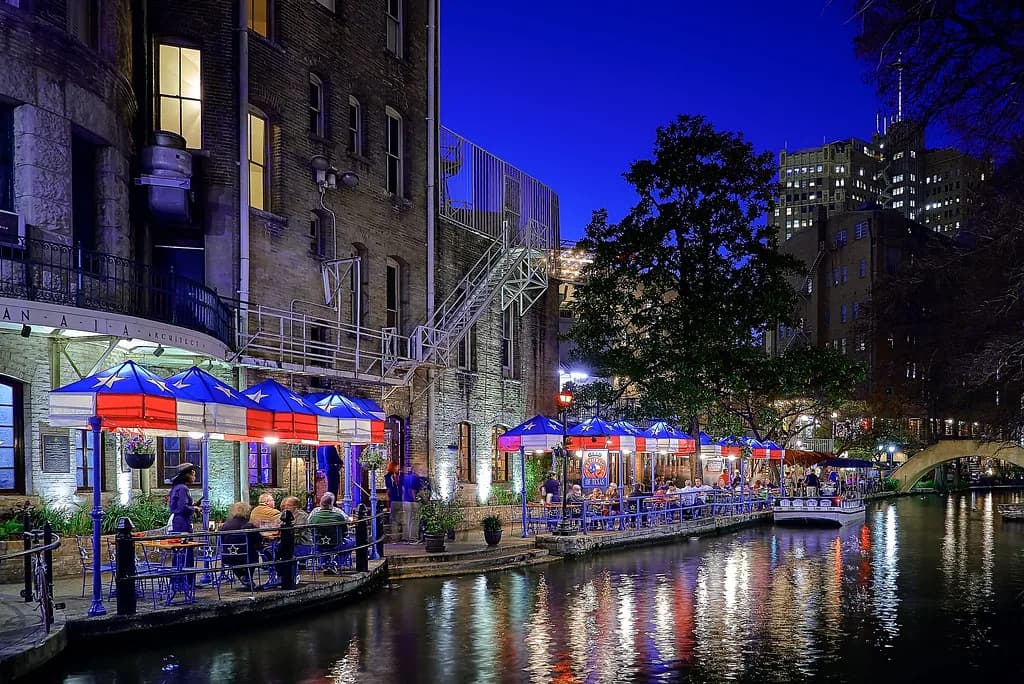
A dog-park morning pairs naturally with a shaded patio lunch, and San Antonio has no shortage of places where a well-exercised dog can settle under the table. The rule of thumb in Texas is that dogs are welcome on outdoor patios, not inside dining rooms, so ask for patio seating when you arrive and keep the leash short. Our guide to dog friendly restaurants san antonio covers places with published patio policies, so you can shortlist a table before the park visit rather than hunting for one afterward.
Time the meal for after the park rather than before, so your dog is tired and the patio is a rest stop instead of a test of patience. Bring a collapsible bowl and water, choose a table away from the walkway, and skip patios that are packed shoulder to shoulder on a hot afternoon.
Hot-Weather Routine and What to Pack
A San Antonio dog-park outing succeeds or fails on timing. Go early, keep the visit under an hour in warm months, and watch your dog for heavy panting, slowing down or seeking shade, all of which mean it is time to leave. Water, a bowl, a six-foot leash, waste bags, a towel and a shade source for the car cover the basics.
Bring the paperwork that matches the posted rules: rabies vaccination records and current license tags on the collar. Even if no one checks at the gate, an incident or a loose dog makes documentation valuable, and the rules are explicit about vaccination and tags.
Keep a small first-aid kit and a spare leash in the car, and plan a cool, shady rest stop between the park and your next destination. In hot weather, a dog who has had a big run needs water and a quiet place to recover before a patio lunch or a car ride.
Etiquette in a Shared Park
Most problems at a dog park start at the gate. Leash your dog until you are inside the double gate, unleash only after the gate is closed, and leash again before you exit. If another dog is crowding the entrance, wait for the handler to move before you go in.
Read body language early. A dog who is tucked, stiff or repeatedly avoiding play is not having fun, and a dog who is pinning or mounting others needs a break. Leaving when your dog is overwhelmed is a kindness, not a failure, and it keeps the park pleasant for everyone.
Keep treats out of the general play area unless you are actively training, and never feed another person's dog without asking. The posted rules allow training treats but not food or drinks, and that distinction protects dogs with allergies or resource-guarding issues.
Dog Park or On-Leash Greenway Walk?
Choose the dog park if your dog enjoys meeting other dogs, needs a fenced space to sprint and handles the noise of a busy enclosure. Choose an on-leash greenway walk if your dog is reactive, elderly, recovering from injury or simply happier with a predictable route and a job to do.
A mixed plan often works best: a short dog-park visit for social time, then a leashed walk on a shaded trail for exercise and sniffing. That combination gives your dog both freedom and structure without overloading a single hour. If you are comparing cities, our guide to dog parks in albuquerque shows how another Southwestern city structures its off-leash spaces.
Whichever you pick, build the day around your dog's tolerance rather than the map. A twenty-minute visit to a good park near your lodging beats a two-hour cross-town adventure that leaves everyone hot and tired. If the trip includes an overnight, dog friendly hotels san antonio bookings put you closer to an early-morning park slot.
Quick Checklist Before You Leave
Before you leave the hotel or rental, confirm three things: which park you are visiting and its entrance address, the leash rule outside the dog park (six feet at Hardberger), and that your dog's rabies tag and license are on the collar. Pack water, a bowl, waste bags and a six-foot leash, and check the parks department directory or conservancy site for closures on the day.
If you are still shaping the wider trip, start with the bigger picture and work down to the park. A day with one off-leash hour, one shaded walk and one dog-friendly meal is realistic and enjoyable in San Antonio heat.
Frequently Asked Questions
Do San Antonio dog parks have separate small-dog areas?
The two dog parks at Phil Hardberger Park do. The conservancy describes both as fenced and shaded with a small-dog side and an all-dog side, and asks owners not to bring large dogs into the small-dog area. Size boundaries vary by park, so check the posted sign at the gate.
What vaccinations does a San Antonio dog park require?
Phil Hardberger Park's posted rules require current rabies vaccination as required by the San Antonio Metropolitan Health District, plus a healthy, disease-free dog wearing a collar with current license tags. Bring your records and keep tags visible.
How many dogs can one adult bring into a San Antonio dog park?
At Phil Hardberger Park the posted limit is two dogs per adult inside the dog park at any time. A group with three dogs needs at least two adults present, so plan the split before you arrive.
Are dogs allowed on the San Antonio River Walk?
The River Walk's pet rules are set by the city and by individual businesses along the route, and those policies are not published in one place. Check the city's current park and River Walk guidance and each business's posted policy before you go, and keep your dog leashed in public areas.
Can you visit a dog park without a dog?
The posted rules are written for handlers and their dogs, and the parks are meant for dogs to exercise and socialize. If you want to watch, stay outside the fence rather than entering the enclosure without a dog.
What is an indoor dog park?
An indoor dog park is an enclosed, climate-controlled space where dogs play off leash, usually for a fee and often with vaccination and temperament requirements. San Antonio's park listings cover outdoor, fenced facilities, so search a dedicated indoor facility directly if you want an air-conditioned option.
Which Texas state parks allow dogs?
Most Texas state parks allow leashed dogs on trails and in campgrounds, but rules vary by park and some areas restrict pets. Check the Texas Parks and Wildlife page for the specific park before you go, and keep your dog on a leash of the posted length.
What should I do if my dog gets overwhelmed at the dog park?
Leash your dog calmly, move to the gate and leave. The posted rules require removing any dog showing signs of aggression, and a short visit that ends well is better than a longer one that ends badly.
Sources
Notes for your next trip with your dog
Optional updates when we add cities and guides.
You might also like


Continue reading
More guides you'll find useful