Dog-Friendly Hikes Flagstaff: Trails, Leash Rules & Packing
Seven Flagstaff trails where dogs are welcome, with real distances, surfaces, leash expectations and heat tips so you pick the right hike for your pup.
On this page
Flagstaff sits high in the pines of northern Arizona, and its trail network is unusually compact for a mountain town: a flat loop inside the city limits, cinder cones east of town, and longer forest routes that begin within a short drive of downtown. For a dog owner, that means you can match a hike to your dog's legs and tolerance for crowds rather than settling for whatever trail happens to be closest.
The catch is that Flagstaff is dry, bright and high, so the planning that matters is water, shade timing and paw protection rather than trail difficulty alone. Pick your route, carry more water than you think you need, and start early on exposed cinder.
Why Flagstaff Works for Hiking With a Dog
Flagstaff is a genuine dog town, with a local hiking culture built around short, shaded forest walks as much as big summit pushes. Trails sit at elevation among ponderosa pines and junipers, so much of the walking is cooler than the desert country to the south, but the thin air will slow a visitor as much as it slows your dog. Plan shorter mileage than you would at home and let your dog set the pace on the climbs.
The trail layout splits neatly into three zones: the flat in-town loops north and east of downtown, the cinder-cone country east of town off U.S. 89, and the longer forest and canyon routes south and north along Fort Valley Road. Grouping hikes by zone keeps driving short and lets you stack a morning trail with an afternoon patio.
A practical note the locals publish: standing water is scarce on these trails, so a collapsible bowl and your own supply is the difference between a good walk and a short one. Treat every route below as a carry-your-own-water hike.
How to Read Leash Rules on Flagstaff Trails
Agency signage controls leash rules, and it varies by trail: the sources describe leashes as required on Fat Man's Loop, recommended on busy Fisher Point sections and the crowded upper Buffalo Park loop, and required on the stretch of the Arizona Trail where it reaches Walnut Canyon. Read the kiosk at your chosen trailhead before you unclip anything.
Locals on quieter outlying trails sometimes relax the leash, and visitor write-ups describe that informal habit openly in places like Red Mountain and the smaller Old Caves loops. That is local custom, not a rule you can rely on. A six-foot leash keeps you legal and predictable when another dog rounds a corner, and it is the safer default on busy in-town loops.
The busy-versus-quiet distinction is the real planning variable. Buffalo Park and the direct summit route at Old Caves see heavy weekend and after-work traffic, while Red Mountain is described as lightly used on weekdays. If your dog struggles with greetings, visit the heavy-use trails on a weekday morning and save the quiet ones for anything goes.
Red Mountain Trail: Soft Cinders and a Ladder
Red Mountain Trail runs about 2.5 miles round trip and lies roughly 25 miles north of Flagstaff on Fort Valley Road, with almost no elevation change, which makes it a comfortable choice for dogs that tire on climbs. The route winds through juniper before easing into a small pseudo-canyon and climbing a short ladder into the caldera of an old cinder cone.
The ladder and the cinder surface are the two things to weigh. Cinders feel pleasantly soft under paw, but the same dark surface heats up in summer sun, and the source specifically suggests booties on hot days. If your dog cannot manage a ladder, the lower canyon still delivers the scenery without the climb.
Weekday crowds here are minimal, which is why locals feel comfortable letting dogs off leash in this area. Keep your dog close and ask before letting it approach anyone, and clip the leash back on if your dog does not greet strangers well.
Old Caves Crater Trail: Choose Your Loop
Old Caves Crater sits about 3.5 miles northeast of the Flagstaff Mall off U.S. 89, with loops ranging from 2 to 3.5 miles. The most popular route climbs straight to the cinder-cone summit and back in about 2.5 miles, passing caves near the top and rewarding the effort with views of the San Francisco Peaks. It is also the most crowded option and the one most likely to put other dogs on your path.
The shorter loops skip the summit crowds, and locals often let dogs off leash on those quieter sections. These are neighborhood trails, so pack out bags and pick up trash. For a reactive dog, the longer quieter loop is the better trade than the summit view.
Buffalo Park: The Flat Loop for Older Dogs and Social Pups
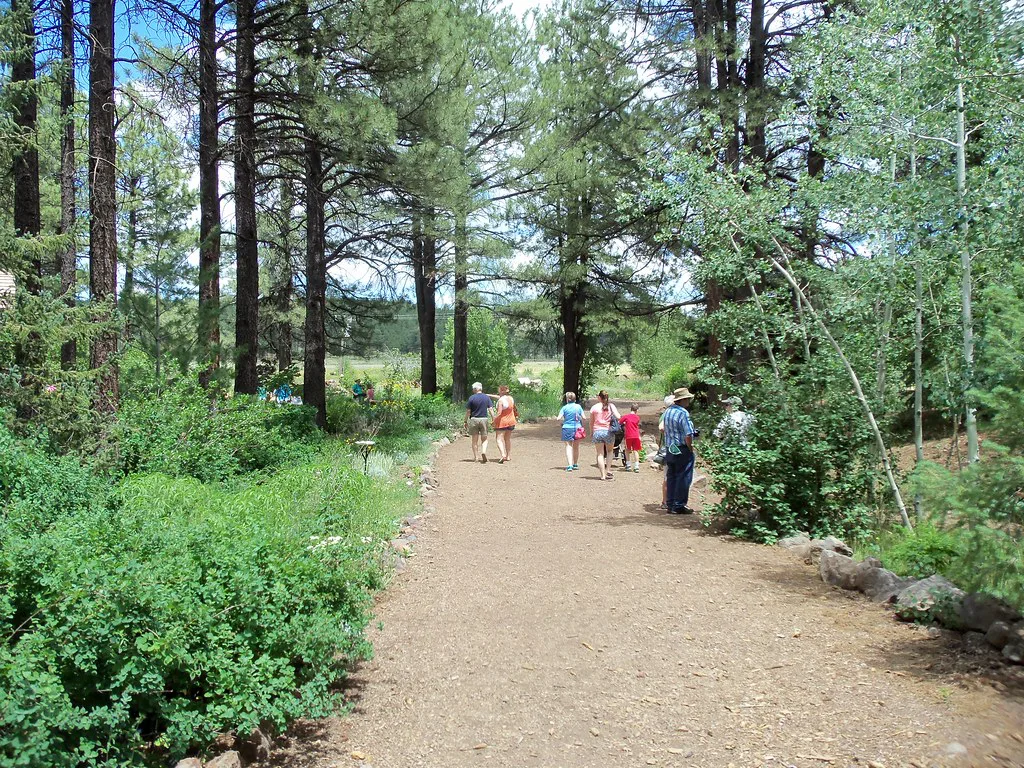
Buffalo Park is the easiest win in the city: a flat two-mile loop on packed dirt at 2400 N Gemini Rd, just northeast of downtown, with views of the Peaks and Mount Elden. The smooth, even surface suits older dogs and anyone recovering from a long drive, and the loop stays open year-round.
It is also the most social trail on this list, with plenty of other dogs and an abundance of smells. Use a leash here, and time your visit: weekends and after-work hours are packed, while weekday daytime is calm and night walks offer stargazing. A resident mule deer family means wildlife sightings are possible, so keep your dog from giving chase.
Fat Man's Loop: Rock Steps and Longer Connections
Fat Man's Loop is a 2.5-mile loop on the east side of town near the Flagstaff Mall, with boulders, oak trees and a little bit of everything packed into a short walk. Leashes are required. The trail splits about a hundred yards in: go left for the steeper climb first and a gentle descent, or right for a gentler ascent and a steeper finish.
The steep sections include high steps that small puppies and older dogs may need help with, so this is the hike to skip with a senior dog or a tiny puppy. Fit dogs can extend the day by linking to the Mount Elden Lookout Trail for serious elevation gain or the Pipeline Trail toward Buffalo Park.
Fisher Point via the Arizona Trail: Long Miles and a Fetch Field
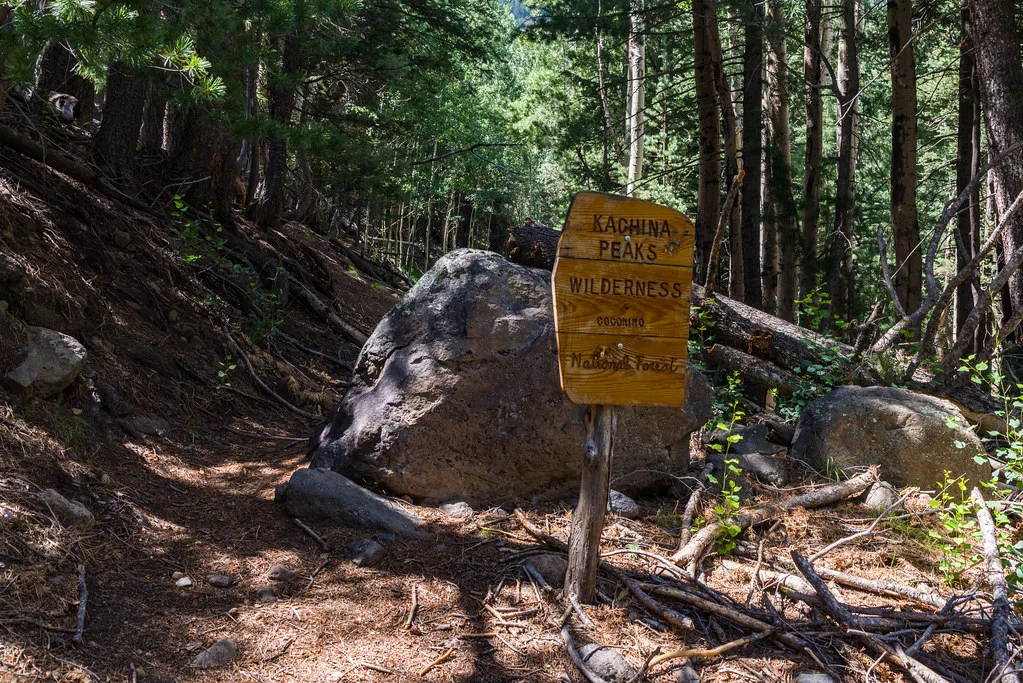
Fisher Point Trail follows the Arizona Trail, and the mileage depends entirely on where you start: trailheads include the edge of NAU at Lone Tree and Brannen Circle, Sandy's Canyon Trailhead and J.W. Powell Blvd, giving options from about 4 miles to 12 miles. The grade is gentle and the smells are rich, which makes it a strong pick for a high-energy dog that needs distance rather than climbing.
The payoff is the Fisher Point rock formation, set in a field that works well for a game of fetch. Leashes are recommended overall because the trail is busy, and they are required on the stretch that reaches the beginnings of Walnut Canyon, where fragile wildlife habitat is the concern.
Picture Canyon Trail: Ponds, Waterfowl and a Waterfall Edge
Picture Canyon Trail sits east of town behind the Flagstaff Mall at 3920 N El Paso Flagstaff Rd, with loops from 0.7 to 2.8 miles. The route passes a pond at the water treatment facility where ducks and geese paddle, then continues through oak trees full of squirrels, which is about as much stimulation as a dog can handle in under three miles.
One real hazard: a small canyon with running water forms a waterfall, and the drop-off deserves a short leash and full attention. Leashes are recommended throughout, and because the trail runs near water, packing out waste matters more than usual to protect the ecosystem.
Shorter Add-Ons: Thorpe Park and Kendrick Park
For a low-effort leg-stretch, Thorpe Park's trail network sits inside Flagstaff and works well for a quick morning loop before a longer drive. Kendrick Park Watchable Wildlife Trail, north of town, adds a slower amble built around looking rather than mileage, which suits dogs that need to sniff more than they need to run.
Treat both as second walks rather than destinations. They pair well with a bigger trail in the morning and a patio afternoon, and they let you skip the drive when you only have an hour.
Trail Surface and Paw Care
The surfaces here divide into four types: soft cinder at Red Mountain and Old Caves, packed dirt at Buffalo Park, rock steps at Fat Man's Loop and forest duff along the Arizona Trail. Packed dirt is the gentlest for older joints; cinder is soft but hot in sun; rock steps demand sure footing and can be hard on small paws.
Booties earn their place on exposed cinder in summer and on any route with sharp rock, and they are worth packing even if you never use them. Check paws after the walk for cinder grit and heat irritation, and build in a rest in the shade mid-hike rather than pushing a full loop without a break.
Water, Shade and Heat: The Real Constraint
Water is not prevalent on Flagstaff trails, so a bowl and a full supply travel with you on every hike, including the in-town loops. The sun is intense at this elevation, and exposed cinder heats faster than shaded forest floor, which is why an early start beats an afternoon one on Red Mountain and Old Caves. The same heat-and-water math applies on dog friendly hikes albuquerque, where exposed desert trails punish a late start just as quickly.
Shade is plentiful along the juniper and pine stretches, so plan breaks there rather than on open cinder or exposed rock. On warm days, pair a shady forest route with restraint: a two-mile shaded loop is a better choice than a longer exposed one for a dog that runs hot.
Etiquette That Keeps These Trails Dog-Friendly
The basic courtesies carry weight here because so many of these routes are shared neighborhood trails. Yield to other trail users, ask before letting your dog greet another, and carry bags on every route, including the busy in-town loops where bins can be sparse.
Wildlife is a live concern: mule deer at Buffalo Park, squirrels at Picture Canyon and the fragile canyon habitat near Walnut Canyon all call for a short leash and attention. On crowded summit routes like the Old Caves summit trail, keep your dog close and step to the side to let faster hikers pass.
Picking Your Hike by Dog
For a senior dog, Buffalo Park's flat, packed two-mile loop is the obvious first choice, with Picture Canyon's shortest loops as a backup. A puppy should start on Buffalo Park or the gentler lower sections at Red Mountain, and should avoid Fat Man's Loop steps until it is grown.
A high-energy dog belongs on the longer Fisher Point stretch, where 4 to 12 miles of gentle Arizona Trail is available. A reactive dog does best on quiet weekday visits to Red Mountain or the longer Old Caves loops, with early starts on Buffalo Park if you want the sociable scene without the crowding.
What to Pack and How to Build a Half-Day Morning
Pack a six-foot leash, a collapsible bowl, two liters of water for you and a share for the dog, waste bags, booties, and a towel for cinder dust. A small first-aid kit and a snack for the dog round out a kit that fits in a daypack.
A workable half-day shape: an early start at Red Mountain or Old Caves before the cinder heats up, a water and shade break, then a short second walk at Buffalo Park or Thorpe Park in the afternoon. Finish with a patio lunch so the dog gets a rest while you eat. If you want more structure for the city side of the trip, build the day around the zones above and keep the driving between them short.
Post-Hike Patios and Breweries Downtown
Downtown Flagstaff has an established patio culture for dogs, and Dark Sky Brewing is listed as pet-friendly with outdoor seating and an on-site kitchen, making it a natural finish after a morning trail. Biff's Bagels is a local landmark that hangs photos of customers' dogs on its walls, a low-key stop for a bagel rather than a full meal.
Patio access is the standard arrangement at breweries and cafes, and menus and hours change with the season, so check current details before you commit. For a fuller list of patios and their dog policies, see the guide to dog friendly restaurants flagstaff.
Where to Stay With Your Dog
Flagstaff lodgings that accept dogs range from the Super 8 NAU Conference Center Downtown off Route 66 and the GreenTree Inn near Northern Arizona University to Arizona Mountain Inn & Cabins, set on 13 acres bordering Coconino National Forest, and Village Camp Flagstaff with RV sites and cabins. Pet fees, weight limits and dog counts are set by each property and are not published in these listings.
When you book, ask three questions: the nightly pet fee, the weight or breed limit, and how many dogs are allowed per room. That is the fastest way to avoid a surprise at check-in. For a shortlist matched to trip styles, see dog friendly hotels flagstaff.
Plan Your Flagstaff Hike
Start with the dog in front of you: a flat two-mile loop at Buffalo Park, a soft cinder walk at Red Mountain, or long gentle miles on the Arizona Trail. Match the trail to your dog's legs, check the leash rule at the trailhead, and carry your own water because Flagstaff's trails are dry.
Go early, watch the cinder for heat, and finish downtown on a patio. That simple shape gets you a real Flagstaff trail day without overcommitting a dog to distance, sun or stairs.
Frequently Asked Questions
What are the best dog-friendly hikes in Flagstaff?
Buffalo Park is the easiest flat loop, Red Mountain Trail is a soft cinder walk north of town, and Fisher Point on the Arizona Trail gives longer mileage with a gentle grade. Old Caves Crater, Fat Man's Loop and Picture Canyon round out a week of options.
Are dogs allowed off-leash on Flagstaff trails?
Leash rules are set by signage at each trailhead, and they differ: leashes are required on Fat Man's Loop and recommended on busy Fisher Point sections. Locals sometimes relax leashes on quiet outlying trails, but that is custom rather than permission. Check the posted rule before you unclip.
Is the Arizona Snowbowl Barefoot Trail dog friendly?
There is no confirmed dog policy for the Snowbowl Barefoot Trail in the sources reviewed, so plan around the trails listed here unless Snowbowl publishes its own rule. Call Snowbowl directly if that trail is the reason for your trip.
Does The Arboretum at Flagstaff allow dogs?
The Arboretum's dog policy is not confirmed in the sources reviewed, so do not assume dogs are welcome. Check the Arboretum's own visitor information before you plan a visit with your dog.
Which Flagstaff hikes are best for older dogs?
Buffalo Park's flat, packed-dirt two-mile loop is the gentlest option, and Picture Canyon's shortest 0.7-mile loop is a good backup. Skip Fat Man's Loop steps and the steeper summit route at Old Caves Crater.
Do I need to carry water for my dog on Flagstaff trails?
Yes. Water is not prevalent on these trails, so carry your own supply and a bowl on every hike, including the short in-town loops. Do not count on a water source along the route.
Are Flagstaff trails too hot for dogs in summer?
Exposed cinder surfaces get hot in summer sun, so start early and consider booties on Red Mountain and Old Caves. Shaded forest stretches stay cooler and are the place to schedule breaks.
What should I pack for hiking with my dog in Flagstaff?
A six-foot leash, water and a bowl, waste bags, booties for hot cinder, a towel and a small first-aid kit. Add a snack for the dog and dress for cool mornings that warm quickly.
Sources
Notes for your next trip with your dog
Optional updates when we add cities and guides.
You might also like
Continue reading
More guides you'll find useful