Dog-Friendly Hikes Colorado Springs: Trail Guide
Plan dog-friendly hikes in Colorado Springs with leash-sign reading, smart timing for heat and storms, close-in open spaces and a practical trail packing list.
On this page
Colorado Springs sits at the foot of the Front Range, and that geography is the whole reason it works so well for hiking dogs: open spaces and forest trailheads are reachable from town without a long drive. The catch is altitude and weather. Mornings are cooler and quieter, and summer thunderstorms tend to build after noon, which reshapes how you plan a dog hike. This guide covers how to read a trailhead sign, when to start, which kinds of close-in and higher routes suit different dogs, and what to carry.
Why Colorado Springs Suits Hiking Dogs
Local hiking guidance notes that Colorado Springs has an unusually wide choice of parks and trails practically on the doorstep, from gentle open spaces to forest hikes that take more commitment. That range is useful when you travel with a dog, because you can match the route to the dog's fitness on any given day instead of forcing one big objective. A short morning loop and a half-day forest climb are both on the table here.
Altitude is the variable that catches visiting dogs. A dog who is fit at sea level may tire faster on Colorado Springs trails, and the afternoon storm risk is higher at elevation in summer, according to local hiking tips from a Colorado Springs veterinary practice. Plan a shorter first outing, watch your dog's breathing and pace, and treat the first hike as an adjustment day.
How to Read a Trailhead Sign Before You Clip the Leash
Leash rules in the Pikes Peak region come from the land manager, not from a single citywide policy, so the sign at the trailhead is the authority for the trail you are standing on. Read it before you unclip anything: look for the leash requirement, seasonal wildlife closures, whether a route is open to pets at all, and any seasonal hours. Photograph the sign so you can check the rules again on the way back.
Some trails and open spaces do allow off-leash time in designated areas, but those are exceptions you have to search out rather than assume. Trail guidance for the area makes the point plainly: if off-leash time is the goal, look specifically for areas that permit it, and keep the leash on everywhere else. That also protects you from relying on another hiker's word about the rules.
If you are building a day around one trail, use a broader dog friendly colorado springs guide to pair the hike with nearby places to eat and stay, then confirm the current pet rules with the managing agency before you drive out. Trail systems change their pet policies with wildlife closures and seasonal restrictions, and a sign at the gate or the agency's own page will always be more current than a trip report.
Timing Your Hike: Weekday and Early Starts
Weekdays are usually quieter than weekends, and on weekends the earliest start you can manage pays off twice: thinner trail traffic and cooler temperatures before the day warms up. Colorado Springs hiking advice for dog owners points to mornings specifically as the way to get out before summer heat rises. Aim to be walking within the first hour or two of daylight on hot-weather days.
The afternoon storm pattern matters as much as the heat. Thunderstorms are more likely after noon at higher altitudes in summer, which means a late start on a high or exposed route puts you and your dog above treeline in the wrong part of the day. Build the turnaround into the plan: set a time to head back rather than a summit goal, and turn around early if clouds start building.
Crowds thin the further you get from the access point, so a short walk from the car park is no guide to how busy the trail will feel a mile in. If your dog is reactive or uncomfortable with unfamiliar dogs, a weekday start or an early weekend start does more for the experience than any piece of gear.
Close-In Open Spaces: Crowds, Shade and Surface
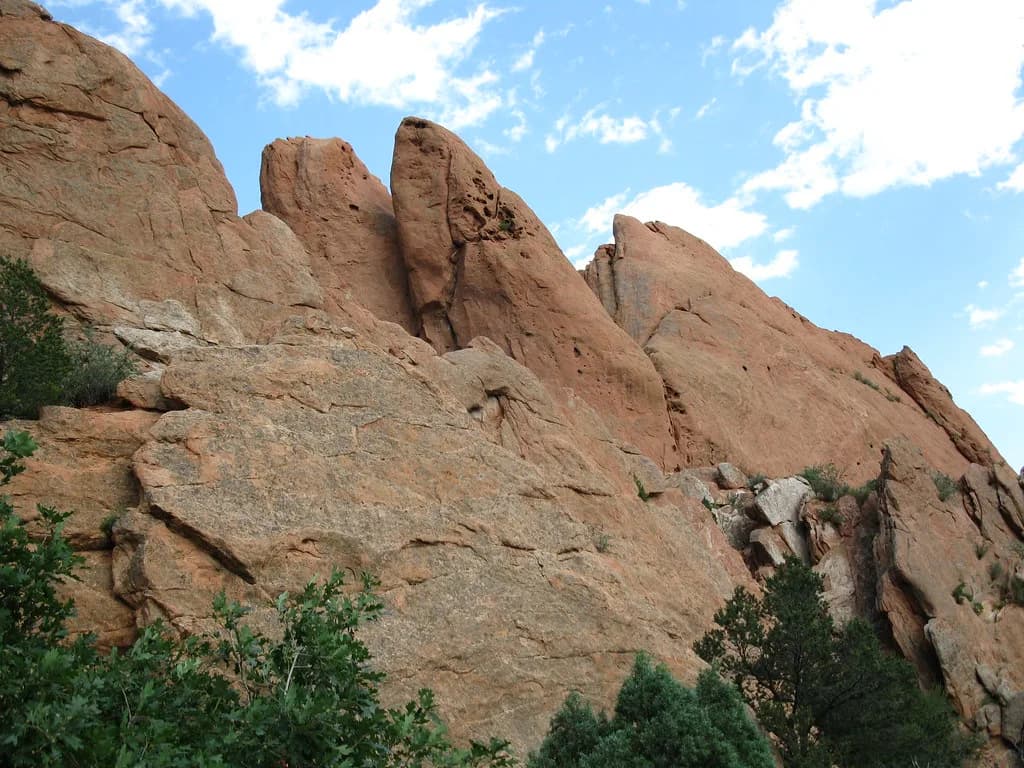
Garden of the Gods is the obvious close-in choice, and it appears on shortlists of dog-friendly Colorado trails alongside routes like St. Mary's Glacier and Chicago Lakes. What matters for planning is that these are popular, accessible trails, which means busy paths and a mix of surfaces rather than a remote wilderness feel. Expect to share the trail and to keep your dog close at the busiest pinch points.
The trade-off with close-in open spaces is exposure. Many Front Range routes run through open terrain with limited shade, so pavement and rock can be hot underfoot well before the air feels uncomfortable to you. Place your hand on the surface for a few seconds; if it is too hot to hold, it is too hot for paws. Early starts and shaded drainages are the practical fix.
Use the trail surface, not the trail name, to decide whether your dog will enjoy the day. Smooth wide paths suit older dogs and short-legged companions, while rocky, uneven ground demands more from joints and paws. On busy close-in trails, keep your dog on a short lead through junctions and overlooks where people cluster.
Higher-Elevation and Forest Hikes Nearby
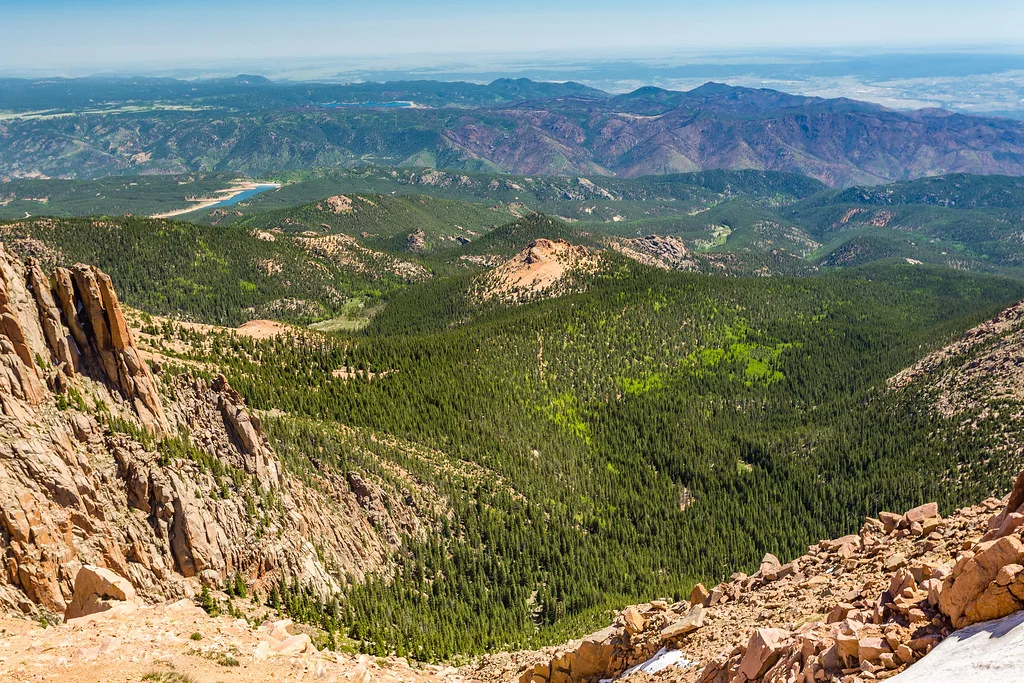
Heading uphill buys cooler air and quieter trails, but it also raises the demands on your dog: rougher footing, steeper grades and thinner air. A dog-friendly trail list for the state puts harder routes like Royal Arch alongside easier options, and Royal Arch is rated among the most popular and difficult dog-friendly trails in Colorado. That rating is a useful filter: match your dog to the difficulty, not to the photo.
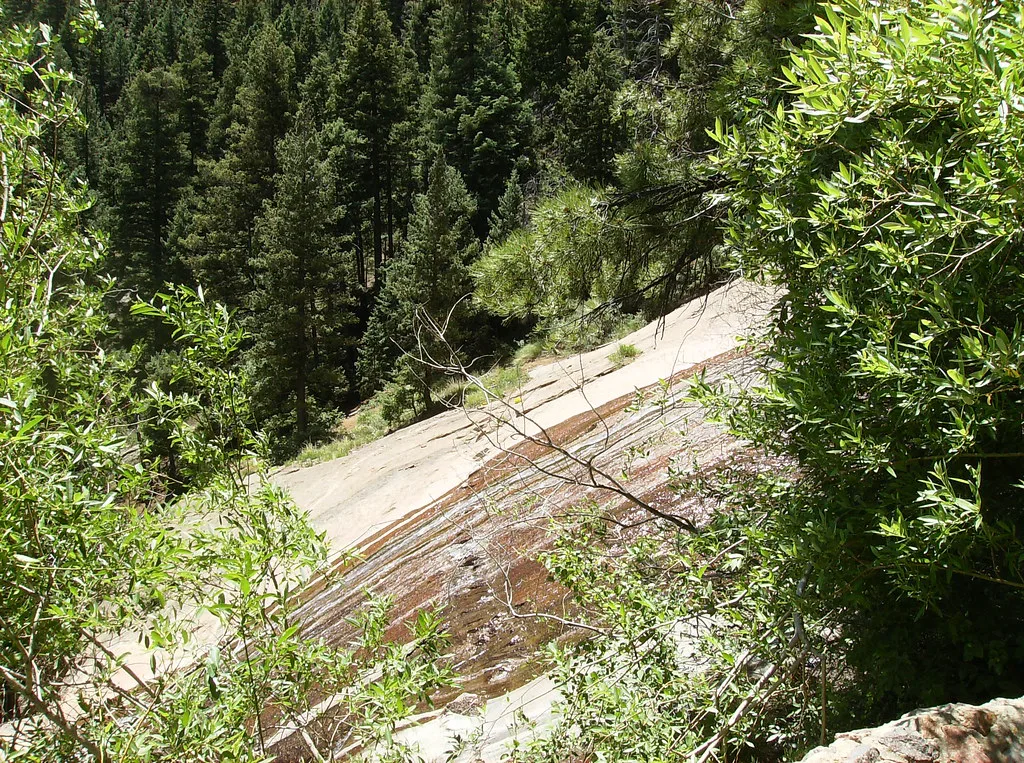
Forest hikes usually mean more shade and more moisture, so carry more water than you think you need and offer it often rather than waiting for a stream. Do not count on water sources being available or safe to drink from, and pack out everything your dog produces. A collapsible bowl makes frequent small drinks easy on a climb.
Be honest about your dog's limits before choosing a harder route. A senior dog may do better on a leisurely stroll than on a steep climb, while a high-energy dog can handle much more, and the terrain and exposure should shape the choice as much as distance. Pick a route where the turnaround is easy if your dog slows down.
Shade, Water and Heat: Knowing When to Turn Around
Heat decisions are made on the trail, not just in the parking lot. Watch for heavy panting that does not settle when you stop, lagging behind on descents and a dog who starts seeking shade on their own; those are signals to shorten the route and head back. Carry water for your dog and offer it at every stop, and use the collapsible bowl rather than pouring water into your hand.
Paw protection is worth thinking through before the trip. Boots can help on hot or abrasive surfaces, but they need to fit well and be broken in before a long hike, so test them on a short neighborhood walk first. If your dog will not tolerate boots, choose shaded routes, start early and check the surface by hand before committing to a sun-exposed stretch. Local hiking guidance also stresses snacks and water for both of you, plus poop bags, as the core kit.
Trail Etiquette With Dogs: Passing and Greeting
On-leash passing is a skill you can practice. When another hiker or a dog approaches, shorten your lead, step to the side and put your body between your dog and the oncoming pair if your dog is unsure. Not every dog on the trail wants nose-to-nose contact, and the etiquette guidance for Front Range trails is explicit that on-leash greetings between strange dogs are best skipped. A simple verbal call to the other owner, asking whether they want the dogs to meet, solves most awkward moments.
Dogs in unfamiliar environments can behave differently than they do at home, and scuffles on busy trails are a real risk. Keeping your dog close through blind corners and giving other trail users space is basic courtesy that also reduces stress on your dog. Pick up after your dog, pack the bag out, and leave the trail as you found it.
What to Pack for a Dog Hike Here
The core kit is simple and the same on every trail: water for you and your dog, a collapsible bowl, snacks, and poop bags. Colorado Springs hiking tips for dog owners list exactly these, and they are the items people most often forget. A lightweight bowl clips to a pack easily and beats improvising a container at the trailhead.
Add layers for the altitude. Mornings at higher elevations can be cool even when town is warm, and afternoon storms bring wind and rain quickly, so a light shell for you and a towel for your dog earn their place in the pack. For a half-day plan, carry enough water for the whole route rather than expecting to refill; for a full day, plan a shorter main hike plus a relaxed town afternoon, with a stop at one of the dog friendly restaurants colorado springs has for patio meals.
Matching the Hike to Your Dog's Age and Fitness
The most useful filter is your dog's condition rather than a trail ranking. A senior dog who manages a leisurely stroll will be happier on a short, even path with shade and benches, while a high-energy young dog can take on steeper, rougher ground with a proper warm-up. Think about joints, coat and experience with uneven terrain before you commit to a longer route.
Build in a recovery day if you are hiking several days in a row, and keep one hike short. For dogs who need to burn energy without a long climb, a fenced run at one of the dog parks in colorado springs can fill a rest day nicely, and a relaxed afternoon at a brewery patio fills the rest. A balanced trip mixes trail time with easier days.
Off-Leash Versus On-Leash: Finding Legal Off-Leash Areas
Assume leashed unless a sign or the managing agency's page says otherwise. Where off-leash areas exist, they are specific designations, and the trail guidance for Colorado Springs makes the point that you have to search them out deliberately rather than hope. Reliable place names tell you much less than the current land-manager page does, so check that before you plan an off-leash outing.
If your dog needs off-leash time, dedicated fenced parks are the cleaner bet than a trail where the rules are unclear. Colorado Springs has several, including Bear Creek Dog Park in Colorado Springs, which is a known off-leash destination and a good option for a run on a day when trails are crowded or the weather is marginal. Keep your trail days leashed and save the free running for designated space.
For a broader picture of where dogs are welcome across the city, from patios to parks, see the dog friendly colorado springs guide, which pairs hiking with the rest of a dog-friendly itinerary.
Sample Half-Day and Full-Day Plans
A half-day plan: start early at a close-in open space, walk 60 to 90 minutes out and back on a shaded stretch, then finish with a patio lunch and a nap for the dog. Keep the route short enough that you are back at the car before the afternoon heat and storm window. This plan suits a first day at altitude, a senior dog, or a travel day when you still want trail time.
A full-day plan: drive to a higher forest trailhead, hike a moderate out-and-back with a set turnaround time, and carry water and snacks for both of you. Have a backup short walk in mind in case weather builds early, and keep the afternoon flexible for a dog-friendly brewery or a hotel rest. If you need a base for the night, dog friendly hotels colorado springs options range from chain properties to independents, and you will want to check each one's pet policy directly.
Beyond Colorado Springs: Other Mountain Towns
If your trip loops through other mountain towns, the same rules apply: altitude, afternoon storms and land-manager leash rules. Northern Arizona has its own version of this pattern, with cooler forest trails and a similar summer storm cycle, covered in the dog friendly hikes flagstaff guide. For a desert-edge version of the same high-altitude puzzle, the dog friendly hikes albuquerque guide covers heat and shade planning at a similar elevation. Read each trailhead sign on arrival rather than carrying assumptions from one state to another.
Plan Your Visit
Build your Colorado Springs hiking day around three decisions: which trailhead sign you are willing to follow, what time you start, and how much water you can carry. Pick a close-in open space for the first outing, save a higher forest route for a day when you are acclimated, and set a turnaround time before you leave the car. Confirm the current pet policy with the managing agency for any trail you have not hiked before.
Pair the trail with the rest of the city: patios, parks and a comfortable base make the trip work for your dog as well as for you. Check the dog friendly colorado springs guide for the full city picture, and keep the leash on unless a sign says otherwise.
Frequently Asked Questions
Where can I go hiking with my dog in Colorado Springs?
Start with a close-in open space such as Garden of the Gods, which appears on published lists of dog-friendly Colorado trails, and treat the sign at each trailhead as the final word on leash rules and pet access. For a quieter day, drive to a forest trailhead higher in the Front Range and set a turnaround time before you leave the car. Local veterinary hiking guidance points out how many parks and trails sit within easy reach of town, which makes it easy to match the route to your dog's fitness.
Are dogs allowed on trails around Colorado Springs?
Many are, but the rules come from the individual land manager rather than one citywide policy, so check the posted sign before you unclip the leash. Look for the leash requirement, seasonal wildlife closures, whether pets are allowed on that specific route at all, and any seasonal hours. Photograph the sign so you can re-check it on the way back, and use the managing agency's own page for anything you plan in advance.
When is the best time of day to hike with a dog in Colorado Springs?
Early morning is the strongest choice on both counts that matter here: cooler temperatures before the summer heat builds and thinner trail traffic. Weekdays are usually quieter than weekends, so if a weekend is your only option, start as early as you can. Colorado Springs hiking guidance for dog owners also flags the increased risk of violent afternoon thunderstorms at higher altitudes in summer, which makes a midday start on an exposed route a poor bet.
What should I pack for a dog hike in Colorado Springs?
Water for both of you, a collapsible bowl, snacks and poop bags form the core kit, and local hiking guidance for the area lists exactly those items. Add a light shell and a towel for sudden wind and rain at altitude, and carry enough water for the whole route rather than counting on a refill. Test any paw protection on a short walk at home before relying on it on a rocky or sun-exposed trail.
Should dogs wear boots on hikes?
Boots can help on hot pavement, abrasive rock and rough forest ground, but only if they fit well and your dog has worn them before the trip. Break them in on short neighborhood walks first, then try a longer trail day. If your dog will not keep them on, choose shaded routes, start early and check the trail surface with your hand before committing to a long sun-exposed stretch.
Are dogs allowed on the Hanging Lake trail in Colorado?
Hanging Lake is managed separately from the Colorado Springs trails covered here, and its pet rules are not confirmed by the sources for this guide. Check the managing agency's current page for the trail before you plan around it, and read the trailhead sign on arrival. Treat any secondhand report as a prompt to check, not as the rule.
Sources
Notes for your next trip with your dog
Optional updates when we add cities and guides.
You might also like


Continue reading
More guides you'll find useful