Dog-Friendly Beaches Tampa: Off-Leash Spots & Leash Rules
Compare Tampa Bay dog beaches by off-leash access, fencing, rinse stations and shade, plus heat, current and red tide safety for a smoother beach day.
On this page
Tampa's dog beaches are scattered from Davis Islands, minutes from downtown, out to Tierra Verde and up the Pinellas County coast to Dunedin. Each spot trades something different: off-leash freedom, fencing, shade, calm water or a longer drive. Picking well starts with two questions about your dog, not the beach list: how reliable is recall, and does your dog actually swim?
This guide groups the beaches by what they offer — fenced off-leash areas, designated dog beaches with water access, and causeway spots on the Pinellas side — then covers the hazards that matter in Tampa Bay, from fast currents beside shipping channels to hot sand and red tide. For the rest of your trip, the broader dog friendly tampa guide covers restaurants, hotels and parks.
Quick Comparison: Which Tampa Dog Beach Fits Your Dog
Three beaches sit inside or just outside Tampa city limits: Davis Islands Dog Beach near downtown, Picnic Island Dog Beach in South Tampa, and Fort De Soto Dog Beach Park out on Tierra Verde. The first two suit a half-day outing; Fort De Soto rewards a full-day commitment with a designated dog beach and a fenced play area.
On the Pinellas side, DeSoto Dog Beach in St. Petersburg, Sunset Beach Dog Park on Treasure Island, Pass-a-Grille Dog Beach in St. Pete Beach, Belleair Causeway and the Gandy Bridge causeway give you Gulf and bay options across a longer drive. Honeymoon Island in Dunedin is the northernmost of the group and fits a Gulf-side day.
Narrow the list by your dog's temperament rather than by ranking. A dog with shaky recall needs a fenced area; a senior dog needs calm, gradual water and shade; a high-energy adolescent does best where there is room to run. Decide that first, then pick the geography.
Davis Islands Dog Beach: Fenced Off-Leash Near Downtown
Davis Islands Dog Beach is the city-close option: a fenced-in sandy beach area where dogs can run off-leash and swim, with a rinse-off station for salt and sand before the ride home. Its location near downtown Tampa makes it the easiest add-on to a city day, and weekday mornings are the quieter window.
The trade-off is popularity. A fenced swim area close to downtown draws a crowd on weekends, which is hard on dogs who guard toys or dislike close greetings. If your dog is reactive, go early, keep the leash on until you read the room, and use the fence as a backup rather than a guarantee of calm.
Treat the fence as containment, not supervision. Posted signs at the entrance carry the current rules, and staff at the park can clarify anything ambiguous; rules on leash use inside fenced areas and swimming access can change.
Picnic Island Dog Beach: Space and Shade in South Tampa
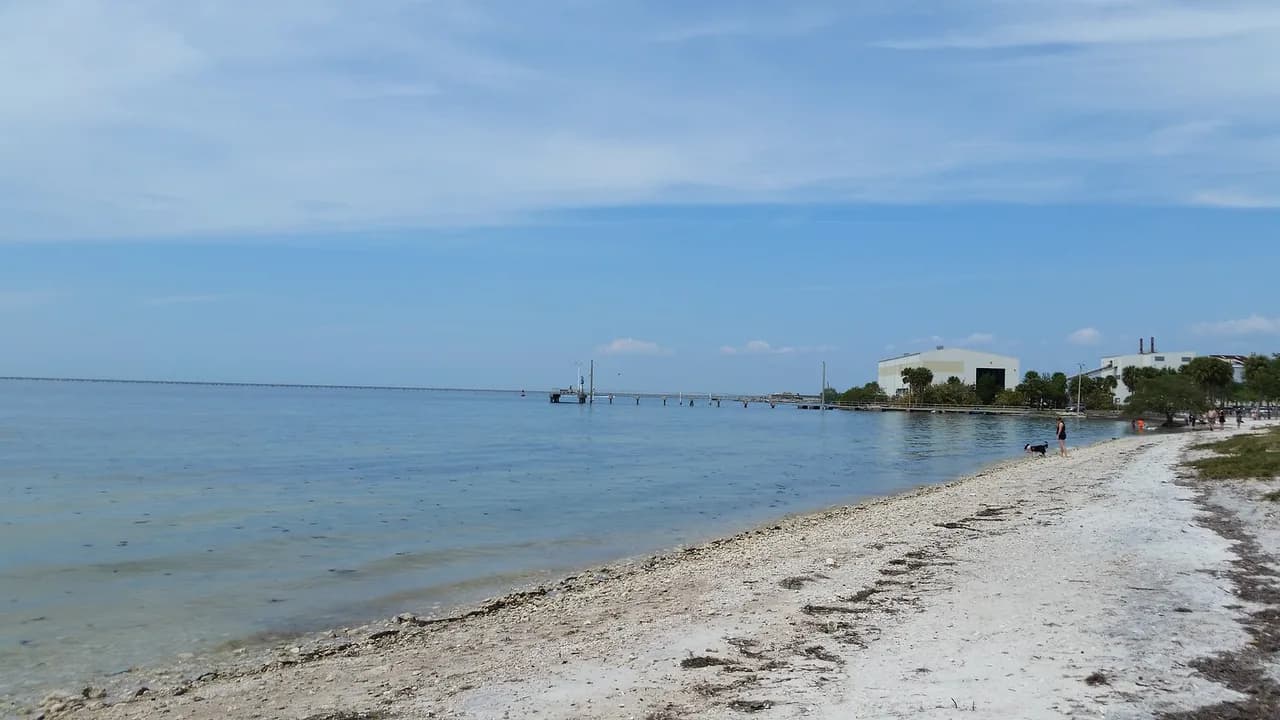
Picnic Island Dog Beach, in South Tampa, is an off-leash beach with a more natural feel: shaded areas, picnic tables and water access, and enough room to spread out. That makes it the better pick for a dog who prefers distance from other dogs over a busy social scene.
Shade and picnic tables change the day for the humans, too. You can set up out of direct sun, rotate your dog into cool-down breaks, and stay longer without overheating either of you. For a dog that finds the Davis Islands crowd overwhelming, this is the calmer alternative within the city.
The trade-off is fewer man-made conveniences than a fenced urban park. Bring your own fresh water, bowl and shade, and expect a more natural shoreline underfoot. If you want a fenced, structured environment instead, a Tampa dog parks comparison is a better starting point than a beach.
Fort De Soto Dog Beach Park in Tierra Verde
Fort De Soto Dog Beach Park sits in Tierra Verde, a drive from Tampa but the most complete dog-beach setup in the area: a designated dog beach plus a fenced play area. The water is shallow with a gradual slope, which suits beginner swimmers and dogs who prefer to wade rather than plunge.
Because it pairs a fenced area with open beach, Fort De Soto works for mixed groups — one dog can play off-leash in the enclosure while another stays leashed on the sand. Budget a full day rather than a quick stop; the drive and the scale of the park both reward it.
Park rules, including any seasonal or wildlife-related restrictions, are posted at entrances and on the park's official page. Check before you drive out, especially if your plans depend on off-leash access.
Pinellas County Dog Beaches: Addresses for Planning the Drive
Pinellas County adds several beaches worth the bridge crossing. DeSoto Dog Beach is at 3500 Pinellas Bayway S in St. Petersburg, Sunset Beach Dog Park at 7545 Bayshore Dr on Treasure Island, Pass-a-Grille Dog Beach along Pass-A-Grille Way in St. Pete Beach, Belleair Causeway Boat Ramp Dog Beach at 528-538 S Belleair Causeway in Clearwater, and Gandy Bridge Causeway Dog Beach at 11231 Gandy Blvd N in St. Petersburg.
Use the addresses as drive-planning anchors, not as a ranking. The Gandy Bridge causeway is the closest to Tampa from the city side; the Pass-a-Grille and Sunset Beach spots put you on the Gulf beaches; Belleair Causeway sits mid-county. Match the beach to the rest of your day rather than making a special trip for a marginal difference.
Causeway beaches are small and exposed, with limited shade and traffic nearby. They suit a short splash-and-walk stop rather than a long lounge, and they reward an early arrival before the sun climbs.
Honeymoon Island Dog Beach in Dunedin
Honeymoon Island Dog Beach, at 1 Causeway Blvd in Dunedin, is the northern Pinellas option and the natural fit for a Gulf-side day that includes Dunedin and the upper coast. It is a designated dog beach rather than a fenced urban park, so your dog's recall and comfort with other dogs matter.
Factor the causeway drive into your timing. Honeymoon Island is a state park, and entrance procedures and posted rules on leashing and wildlife apply; read the signage at the entrance before you go rather than relying on a beach list.
Off-Leash vs. Leashed: Read the Sign Before You Unhook
The distinction that matters most is between a fenced off-leash area and a designated dog beach. Davis Islands has a fenced sandy beach area for off-leash play, and Fort De Soto pairs a designated dog beach with a fenced play area. Those fenced spaces are the safe bet for dogs with imperfect recall.
A designated dog beach without fencing is a different proposition. Your dog may be allowed on the sand but still expected to stay under control, and leashing rules can vary by section. Read the signage at the entrance, and check current county rules before you go, since one beach's rules may not carry over to the next.
If your dog's recall is unreliable near water and wildlife, choose fencing over freedom. A long line gives some room to explore on leashed stretches without gambling on a recall your dog has not practiced around gulls and waves. That is a training decision, not a rule you can look up.
Currents, Channels and Shipping Lanes
Several Tampa Bay dog beaches sit beside natural formations or man-made channels that create fast current along the shore, and pets and people can be swept away from the shoreline within minutes. That is the hazard most owners underestimate, because the water can look calm at the edges.
Be familiar with current conditions before you let your dog swim, supervise swim time closely, and consider a life jacket for your dog and for you. Flat-faced breeds, seniors and first-timers are the dogs most likely to tire quickly in moving water.
Hot Sand, Shells and Oyster Beds
Sand gets blisteringly hot in the Florida sun, and paws burn the same way they do on asphalt. Wear shoes or time your beach visit outside the middle of the day, and check the surface with your hand before your dog walks across it.
Tampa Bay shorelines include Eastern oyster beds in the same mangrove channels people like to play in, and their shells can cause deep cuts on paws and feet. Water shoes help but do not make oyster beds safe, so steer your dog away from them entirely.
Scan the sand before you settle in. Old fishing tackle, trash and food are among the most common beach hazards, and clearing litter from your patch is a quick habit that protects every dog that follows.
Red Tide and Water Quality Checks
Red tide events occur almost annually in Florida with unpredictable severity, and the organism behind them can cause respiratory distress in people who inhale it. Dogs that eat or play with wildlife killed by red tide can get very sick, so keep your dog away from dead fish and birds.
Check Pinellas County's year-round red tide status on the Florida Fish and Wildlife Conservation Commission website before a beach day, particularly in late summer and fall. If the status is poor, shift to a park or a patio day and save the beach for later.

Salt Water, Fresh Water and Swimming Ability
Bring fresh drinking water and a bowl, offer it often, and discourage your dog from drinking from the Gulf or the bay. A little salt water can cause diarrhea, while large amounts can trigger a dangerous chemical imbalance.
Not every dog is born to swim. Senior dogs, flat-faced breeds and first-timers may panic or tire quickly, so start in shallow, calm water, supervise closely and use a life jacket where the water is choppy or moving. If you are unsure how your dog handles water, a calm bay beach with a gradual entry is a better first outing than an open Gulf shore.
Watch for heat stroke and overexertion, and keep medications and preventives current so you are not bringing parasites home from a playdate. Frequent shade breaks and short swim sessions beat one long, exhausting outing.
What to Pack and When to Go
Pack fresh water, a bowl, shade, a leash, poop bags, towels and a life jacket for the water. Add pet-safe sunscreen for short-coated or lightly pigmented dogs, and water shoes if you plan to walk mangrove shorelines. A long line helps on leashed stretches where you want a bit more range.
Go early. Mornings are cooler, the sand has not baked yet, and popular spots like Davis Islands are calmer on weekday mornings. Midday in summer is the worst combination of hot sand, hot air and crowded water.
If you are staying overnight, sort out lodging before you plan beach days, since pet policies and fees vary widely. A comparison of dog friendly hotels tampa is a more efficient starting point than calling properties one by one.
Half-Day vs. Full-Day Plans
For a half day, pick Davis Islands or Picnic Island. Davis Islands gives you a fenced off-leash swim close to downtown; Picnic Island gives you shade, tables and room to spread out. Either pairs neatly with a patio lunch afterward.
For a full day, commit to Fort De Soto or one of the Pinellas beaches. Fort De Soto's designated dog beach and fenced play area make it the most flexible choice for mixed groups, while Honeymoon Island suits a Gulf-side loop through Dunedin.
Build the day around the tide and the heat rather than a fixed schedule: swim early, rest in shade at midday, and take a second short session late if your dog still has energy. A tired dog at the end of the day is a sign the plan worked.
Etiquette and Posted Rules at the Beach
Scoop every time, keep your dog from approaching other dogs on leash, and give space at the water's edge where dogs bunch up. Distractions at the beach affect a dog's listening skills, so keep a leash handy even where off-leash play is allowed.
Read the signage at each entrance before you unhook anything, because leash length, swimming access and wildlife rules differ from beach to beach and can change seasonally. If a sign is unclear, ask park staff on site to clarify the current rule.
Plan Your Beach Day
Start with your dog's recall and swimming ability, then choose geography: Davis Islands and Picnic Island for a city half-day, Fort De Soto for a full day with fenced backup, and the Pinellas beaches for a Gulf-side outing. Each trade-off is real, and the right beach is the one that matches your dog's temperament. If you are weighing the same decision in another city, our guide to dog friendly beaches detroit applies the identical recall-and-swim test.
Then handle the details that ruin beach days: check red tide status, arrive early to beat hot sand, bring fresh water, and steer clear of channels, oyster beds and fishing debris. When you want to round out the trip beyond the sand, the dog friendly restaurants tampa guide covers patios near the water.
Frequently Asked Questions
Which Tampa dog beaches are off-leash?
Davis Islands Dog Beach has a fenced sandy area where dogs can run off-leash and swim, and Fort De Soto Dog Beach Park pairs a designated dog beach with a fenced play area. Picnic Island Dog Beach is described as an off-leash beach with shade and water access. Other Pinellas beaches vary by section, so read the entrance signage before unhooking your leash.
Is the Fort De Soto dog beach fenced?
Fort De Soto has a designated dog beach plus a separate fenced-in play area, so you can choose between open sand and an enclosed space. The fenced area is the better fit for dogs with unreliable recall. Check the park's posted rules at the entrance and on its official page before you drive out.
Can I bring my dog to Clearwater Beach?
Clearwater Beach appears in dog-beach search results, but no official source with a posted canine policy confirms access for pets. Rather than assume, check the city of Clearwater's beach rules and signage, or choose a confirmed spot like Belleair Causeway Boat Ramp Dog Beach at 528-538 S Belleair Causeway in Clearwater.
How do I keep my dog safe from salt water and currents at Tampa Bay dog beaches?
Bring fresh water and a bowl and discourage drinking from the bay or Gulf, since salt water can cause diarrhea and, in large amounts, a dangerous chemical imbalance. Several beaches sit beside channels with fast current, so supervise swim time and consider a life jacket for your dog. Keep dogs away from oyster beds and fishing debris.
When should I avoid taking my dog to the beach in Florida?
Skip midday in summer, when sand can be hot enough to burn paws, and avoid beach days during red tide events. Check Pinellas County's year-round red tide status on the Florida Fish and Wildlife Conservation Commission website before you go, and stay away from wildlife that has washed ashore.
What should I pack for a dog beach day near Tampa?
Pack fresh water and a bowl, shade, a leash or long line, poop bags, towels and a life jacket for the water. Pet-safe sunscreen helps short-coated dogs, and water shoes offer some protection on shell-strewn shorelines. A first-aid kit for cut paws is worth the space.
Do I need to book a hotel with a pet policy before a Tampa beach trip?
If you are staying overnight, yes: pet fees, weight limits and the number of dogs allowed vary by property and should be confirmed when you book. Compare policies before you reserve, then plan beach days around the drive from your hotel rather than the other way around.
Sources
Notes for your next trip with your dog
Optional updates when we add cities and guides.
You might also like


Continue reading
More guides you'll find useful